
Summary
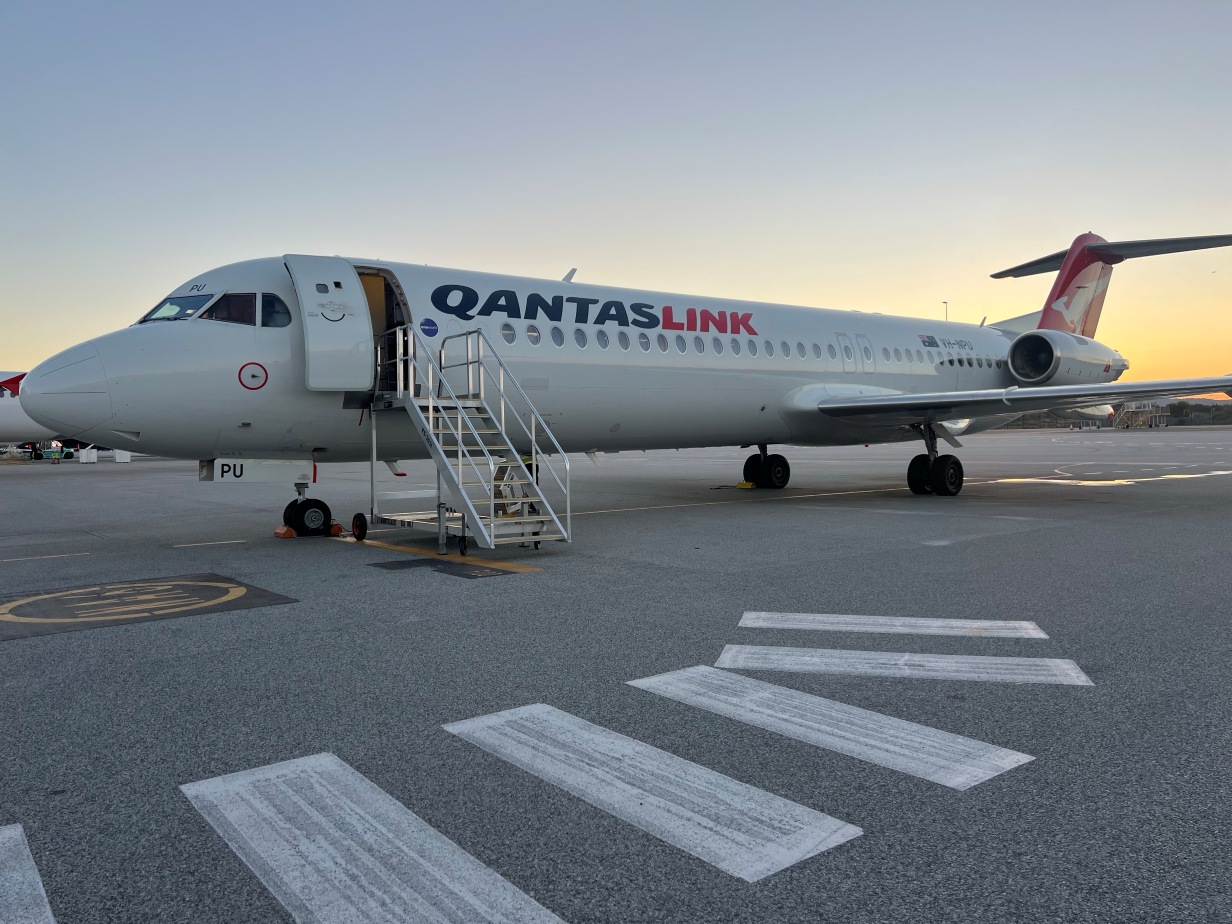
A veteran Fokker 100 which has flown for American Airlines, Austrian Airlines and, most recently, QantasLink has begun a very different chapter in its long career.
Fokker 100 VH-NPU, named Meekatharra, has made its final flight across Australia to Shellharbour Airport in New South Wales, where it has been donated to the Historical Aircraft Restoration Society (HARS).
Rather than heading for storage or the scrapyard, the 32-year-old jet will now be preserved as a public exhibit – ensuring another example of the increasingly rare Fokker 100 survives for aviation enthusiasts to enjoy.
But this particular aircraft has quite a story to tell.
Before spending almost a decade flying across Western Australia, VH-NPU carried passengers for two of the best-known airlines in Europe and the United States.
A New Home for VH-NPU
QantasLink has donated the recently retired, 100-seat aircraft to HARS following its final journey to Shellharbour Airport.
It becomes the second former QantasLink Fokker 100 to be preserved by the organisation, following the donation of another example to the HARS Aviation Museum at Parkes in February 2026.
At Shellharbour, VH-NPU joins an impressive collection of historic airliners which already includes Qantas’ first Boeing 747-400, VH-OJA, City of Canberra, as well as former Qantas Boeing 707-138 VH-XBA.
The Fokker will eventually become a public exhibit, giving visitors the opportunity to get close to an aircraft type which is becoming increasingly difficult to see in passenger service.
For VH-NPU, it is a fitting retirement after a career which began on the other side of the world more than three decades ago.
VH-NPU Started Life With American Airlines

Photo: Caribb
The aircraft is Fokker 100 construction number 11502, and first flew from Amsterdam Schiphol on 25 February 1994.
At the time it was already painted in the colours of its first customer: American Airlines.
Registered N1469D, the aircraft was delivered to American in March 1994 and operated its first revenue service between Chicago O’Hare and Philadelphia on 11 March.
The Fokker 100 was an important aircraft for American during the 1990s and early 2000s.
American ultimately operated a large fleet of the type on domestic services, with the 100-seat jet filling the gap between smaller regional aircraft and the airline’s larger MD-80s and Boeing 737s.
N1469D spent almost ten years in American’s fleet before operating its final revenue flight, from Fayetteville to Chicago O’Hare, on 2 February 2004.
The following day it was flown to Mojave for storage. However, unlike many of American’s former Fokker 100s, its career was far from over.
From American Airlines to Austrian

OE-LVB flying with Austrian Arrows in 2011. Photo: o-wagen
N1469D was subsequently returned to Europe, initially passing through Fokker Services and briefly taking up the Dutch registration PH-ZFE.
By August 2004 it had become OE-LVB and joined the Austrian Airlines group, initially flying with Tyrolean Airways and Austrian Arrows.
The aircraft was named Vilnius and continued operating European passenger services for more than another decade.
It later appeared in the main Austrian Airlines operation, remaining with the carrier until being withdrawn from use in Vienna in July 2016.
Once again, that could easily have been the end for an aircraft which was already more than 22 years old.
Instead, OE-LVB was about to embark on another long-distance journey and a third airline career.
The Fokker Heads to Australia
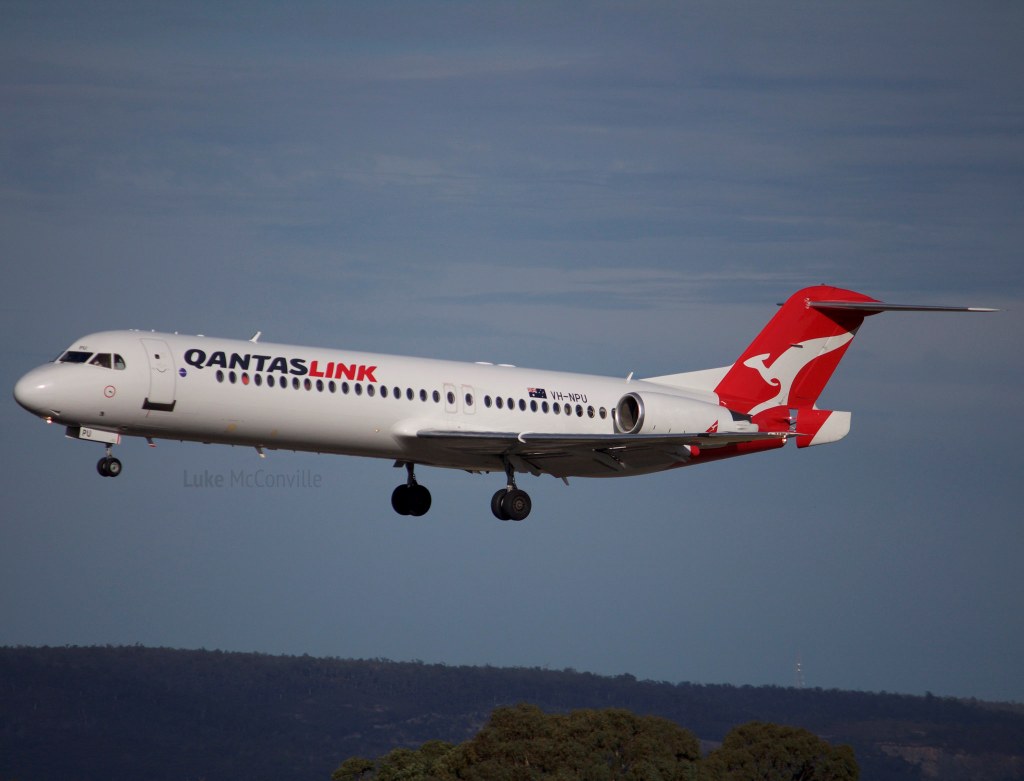
VH-NPU with QantasLink. Photo (c) Luke McConville
The aircraft was acquired by Alliance Airlines and registered VH-NPU in Australia in August 2016.
It subsequently made the lengthy ferry flight from Bratislava to Perth in November that year, travelling via Trabzon, Al Ain, Penang and Jakarta. By the time it reached Western Australia, the aircraft was already wearing QantasLink colours.
VH-NPU joined QantasLink operations in December 2016 and was the final Fokker 100 to be added to its fleet.
It was operated by Network Aviation, which forms an important part of the QantasLink operation in Western Australia.
Over the following decade, Meekatharra became a familiar sight around Perth and regional airports across Western Australia.
The aircraft flew 7,543 QantasLink flights covering nine million kilometres, accumulating more than 11,250 flying hours and carrying around one million passengers during its Australian career.
Its duties included connecting communities such as Kalgoorlie, Newman and Paraburdoo, as well as providing important links supporting Western Australia’s huge resources industry.
What Is the Fokker 100?

Ken Fielding/https://www.flickr.com/photos/kenfielding, CC BY-SA 3.0 <https://creativecommons.org/licenses/by-sa/3.0>, via Wikimedia Commons
The Fokker 100 was developed in the Netherlands during the 1980s as a modern successor to the earlier Fokker F28 Fellowship.
Although its lineage was obvious, the new aircraft incorporated a significantly stretched fuselage, redesigned wings, updated systems and more efficient Rolls-Royce Tay turbofan engines.
The prototype first flew in 1986, with Swissair becoming the first airline to put the type into commercial service in 1988.
With seating for roughly 100 passengers, the Fokker 100 arrived at an ideal time for airlines looking for a small jet capable of operating relatively thin short- and medium-haul routes.
Major operators included American Airlines and US Airways in the United States, alongside European carriers such as KLM, Swissair and Austrian.
However, Fokker’s financial difficulties ultimately brought production to an end following the manufacturer’s collapse in 1996. The last Fokker 100 was delivered in 1997, with a total of 283 examples produced.
Despite that, the aircraft proved remarkably durable.
Large numbers subsequently found second careers in Australia, where the Fokker 100’s capacity, performance and economics made it particularly useful for regional and fly-in/fly-out services supporting the mining industry.
That has helped Australia become one of the last great strongholds of the Fokker 100.
QantasLink Is Saying Goodbye to the Fokker 100
That era is now beginning to draw to a close.
QantasLink is gradually replacing its Western Australian Fokker 100 fleet with Embraer E190s, which offer improvements in reliability, fuel efficiency and passenger comfort.
The first of these E190s is expected to arrive in Perth in September 2026.
As more of the newer aircraft arrive, the familiar rear-engined Fokkers will progressively disappear from QantasLink operations.
That makes the decision to preserve VH-NPU particularly welcome.
Instead of disappearing into storage or being dismantled for parts, an aircraft which has carried passengers around the United States, Europe and Australia will remain intact for future generations.

