
Summary
For a generation of European plane spotters the name Hapag-Lloyd was synonymous with classic jets and holiday flights.
Its distinctive orange, blue and white aircraft became a familiar sight at airports across Germany and the Mediterranean, carrying millions of passengers to destinations in Spain, Greece, Portugal, the Canary Islands and beyond.
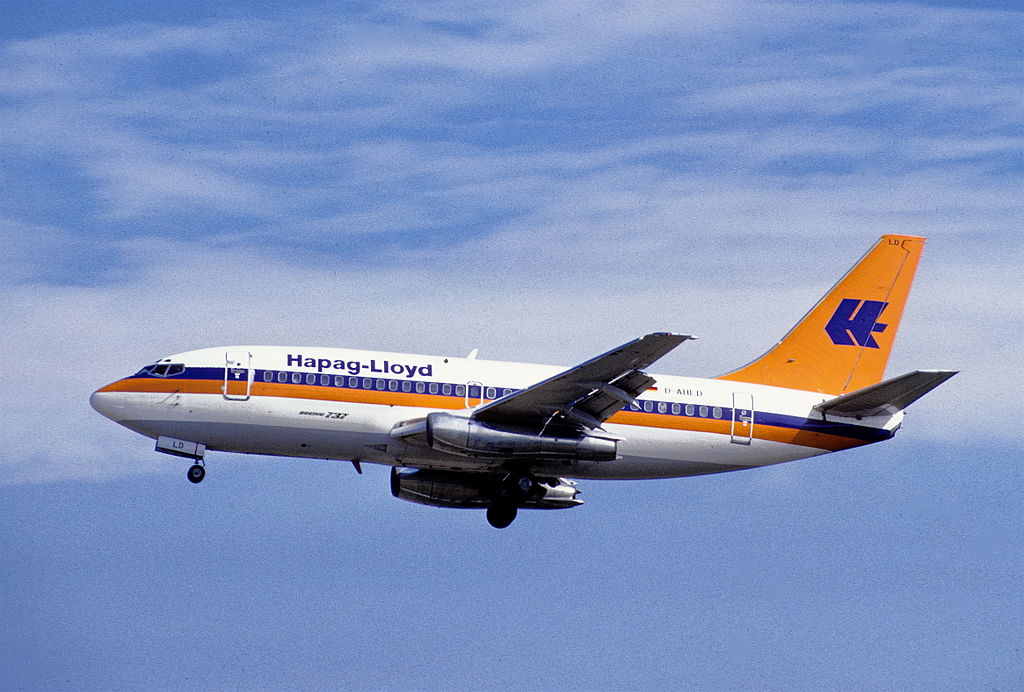
Over its long history the airline operated everything from Boeing 727s and early 737s to Airbus A300s and A310s, before becoming an important early operator of the Boeing 737-800.
The Hapag-Lloyd name has disappeared from passenger aircraft today, but the airline itself did not simply vanish. Its story continues through TUI fly Deutschland – and one particularly colourful Boeing 737 now celebrates that heritage.
From Ships to Aircraft
Hapag-Lloyd Flug was established in 1972 by the Hapag-Lloyd shipping group.
The original idea was closely connected to the company’s maritime activities. Aircraft could transport German holidaymakers to ports where they would join Hapag-Lloyd cruises, providing the company with another link in the holiday travel chain.
Operations began on 30 March 1973, when a Boeing 727-100 departed Hamburg for Ibiza. The fledgling airline initially had three second-hand 727-100s acquired from Japan’s All Nippon Airways.
It was an ideal moment to enter the business. Package holidays were booming in West Germany, and increasing numbers of travellers were heading for the beaches of Spain and other Mediterranean destinations.
Hapag-Lloyd Flug soon expanded beyond simply feeding cruise ships and developed into a substantial leisure airline in its own right.
The Boeing 727 Years
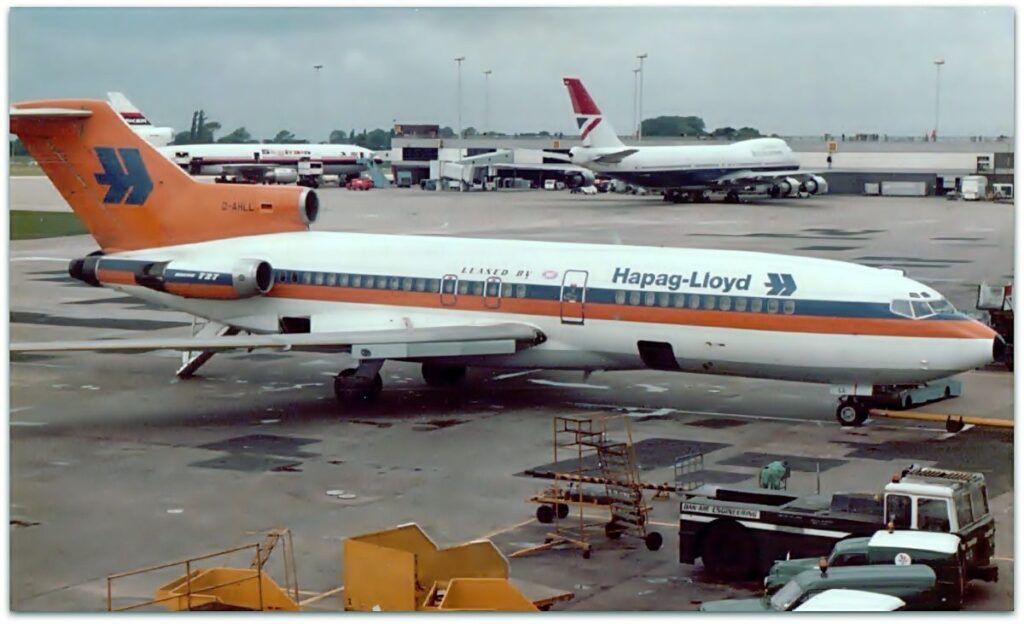
An early Hapag-Lloyd Boeing 727-100. Photo: Riik@mctr
The Boeing 727 became one of the aircraft most closely associated with Hapag-Lloyd’s early years. The aircraft was perfectly suited to the European charter market of the 1970s.
By 1979, Hapag-Lloyd’s 727 fleet had grown considerably, and the type could regularly be seen carrying German holidaymakers south towards the Mediterranean. The airline operated both the shorter 727-100 and larger 727-200.
Hapag-Lloyd’s original colour scheme featured a largely white fuselage with a strong orange – officially described as a cognac colour – running along the windows and onto the tail, combined with blue detailing.
It was unmistakably a product of the 1970s, yet the basic identity survived remarkably well into the following decades.
Hapag-Lloyd Gets Bigger
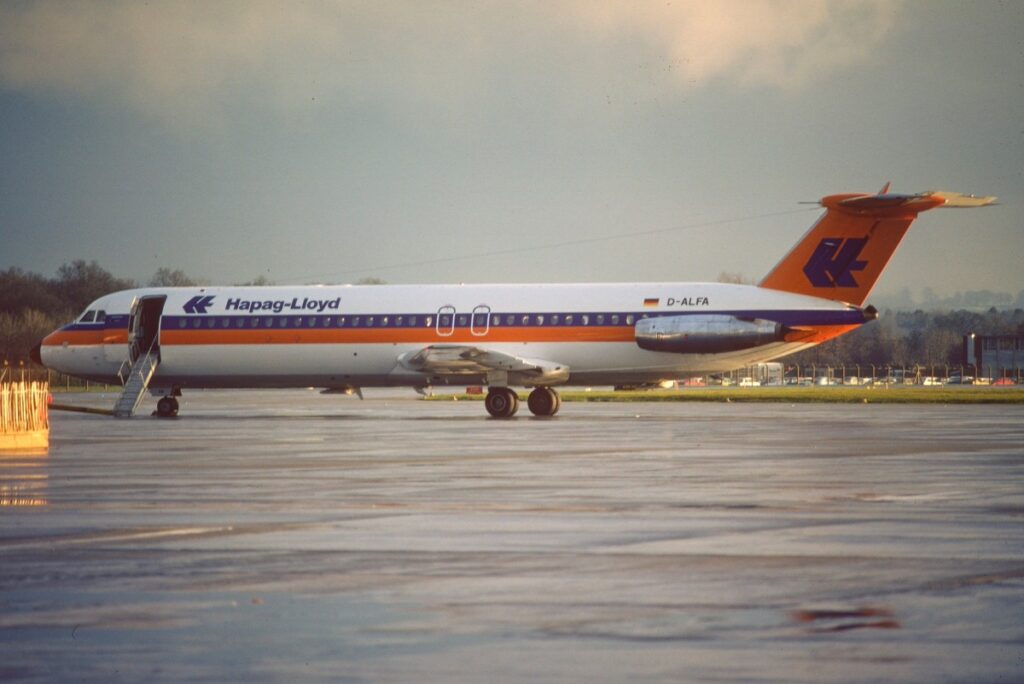
A rare view of a Hapag Lloyd BAC 1-11. Photo: Aero Icarus
Another important moment came in 1979 when Bavaria Germanair was incorporated into Hapag-Lloyd Flug.
This brought some interesting new aircraft into the fleet, including the BAC One-Eleven and, significantly, the Airbus A300B4.
The One-Elevens were relatively short-lived, but the A300 meant Hapag-Lloyd now had a widebody aircraft capable of carrying large numbers of holidaymakers on its busiest routes.
During the 1980s the airline also increasingly turned towards the Boeing 737.
The 737-200 became another classic Hapag-Lloyd type and, in its orange-and-blue colours, was a familiar sight around European holiday airports.
For spotters visiting places such as Palma de Mallorca or the Canary Islands during this period, Hapag-Lloyd aircraft were almost part of the scenery.
The A310 and 737 Era
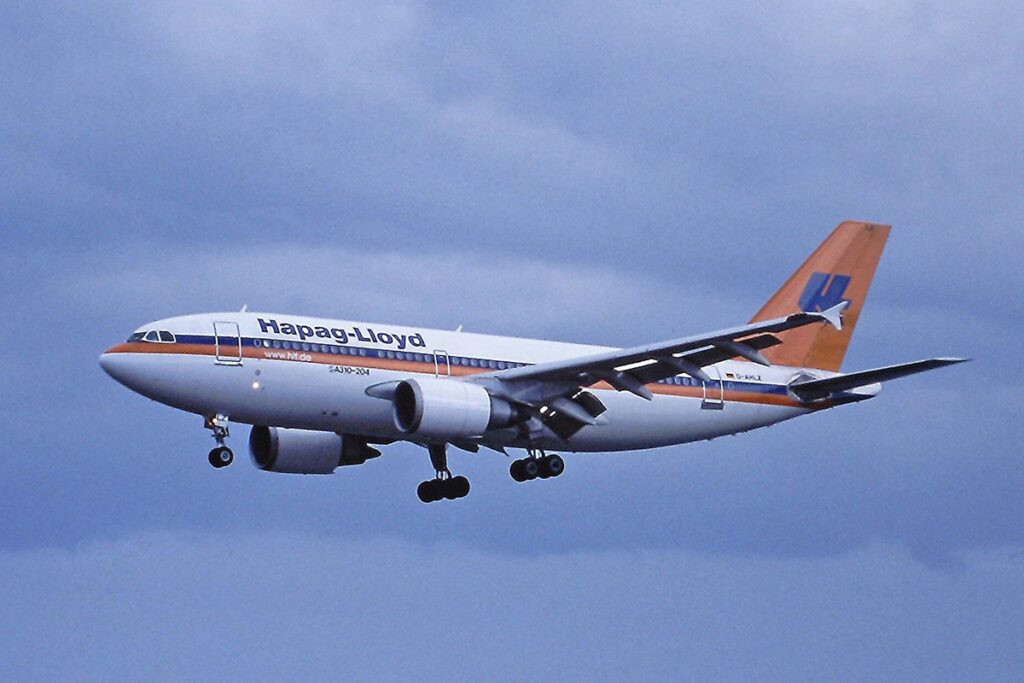
Hapag Lloyd A310. Photo: Rob Hodgkins
Hapag-Lloyd’s first Airbus A310s arrived in 1988 as replacements for the A300s. Both the A310-200 and longer-range A310-300 would eventually be operated, and it gave Hapag-Lloyd much greater flexibility.
While it was ideal for carrying large numbers of passengers to high-demand Mediterranean and Canary Islands destinations, it could also fly much further.
Hapag-Lloyd consequently experimented with long-haul leisure flying, serving destinations including New York, Toronto, Malé in the Maldives, Mombasa and the Dominican Republic. Most of these long-haul routes were relatively short-lived, although services to the Dominican Republic lasted longer.
The sight of a Hapag-Lloyd A310 was one of the more distinctive features of European charter aviation during the 1990s.
At the same time, smaller Boeing 737s handled much of the airline’s bread-and-butter European flying.
A New Generation of 737s
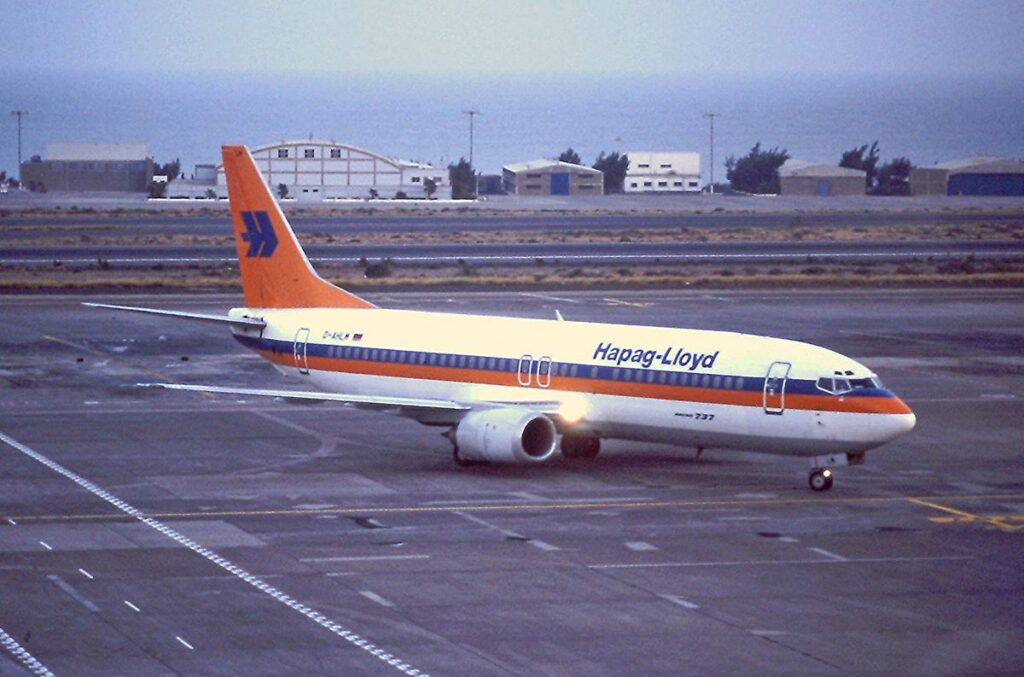
A 737-400. Photo: Rob Hodgkins
Hapag-Lloyd progressed through several generations of Boeing’s narrowbody.
Following its 737-200s, the airline introduced the Boeing 737-400 and 737-500 around the turn of the 1990s.
Later, Hapag-Lloyd became the launch customer for the Boeing 737-800, placing an initial order for 16 aircraft in 1994. The first example was handed over in 1998.
In 2000, Hapag-Lloyd became the first airline to operate a Boeing 737-800 fitted with blended winglets, having provided an aircraft for testing and certification of the fuel-saving modification.
By this point, however, much bigger changes were taking place behind the scenes.
Hapag-Lloyd Becomes Part of TUI
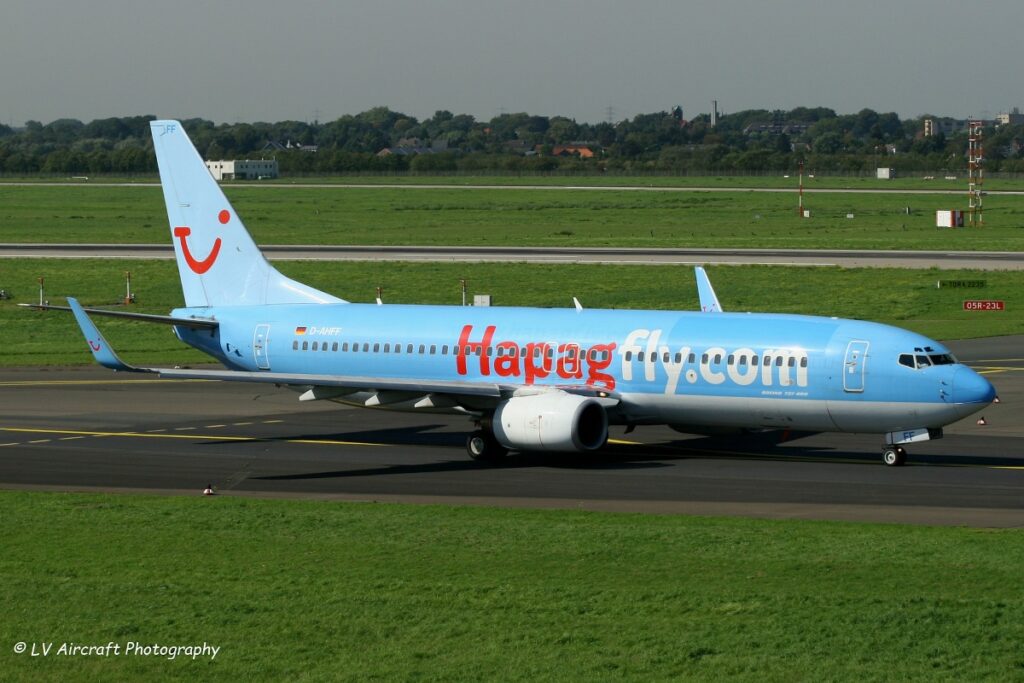
The brief HapagFly livery. Photo: Luc Verkuringen
During the late 1990s Hapag-Lloyd became increasingly integrated into the tourism group which ultimately became TUI.
This eventually had a dramatic effect on the airline’s appearance.
For almost 30 years Hapag-Lloyd aircraft had retained variations of the familiar orange, blue and white colour scheme. But TUI was developing a unified identity for its growing collection of European holiday companies and airlines.
In 2002, Hapag-Lloyd aircraft began appearing in TUI’s light-blue colours, complete with the now-familiar red TUI “smile” logo on the tail.
The traditional Hapag-Lloyd livery was disappearing. Then in 2005 the airline itself was renamed Hapagfly; another step towards a single TUI aviation identity.
What Was Hapag-Lloyd Express?
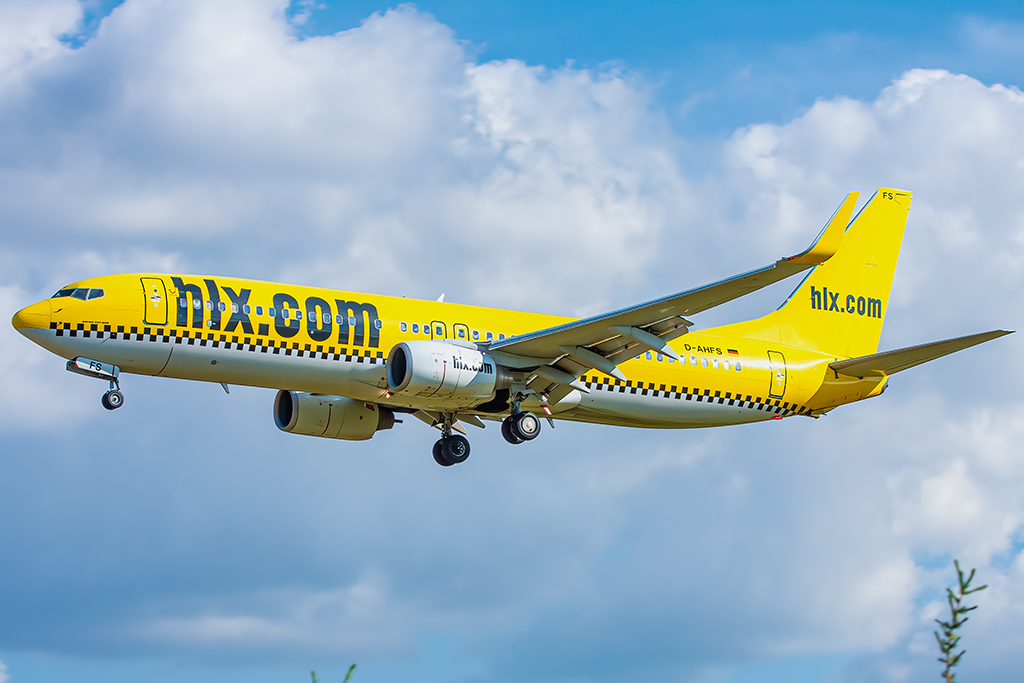
Hapag Lloyd Express New York Taxi scheme. Photo: wilco737
There was another Hapag-Lloyd name appearing around European airports during this period.
Hapag-Lloyd Express, usually shortened to HLX, was launched in December 2002 as TUI’s response to the rapidly expanding European low-cost airline market.
Despite the name, HLX was not simply a low-cost division of Hapag-Lloyd Flug. It was established as a separate company within the TUI group, with flights operated on its behalf by Hapag-Lloyd Flug and Germania.
Few airlines of the period had a more distinctive image.
HLX promoted the idea of flying for the price of a taxi, and its aircraft were painted bright yellow with black checkerboard markings intended to resemble a New York taxi cab.
The brand operated from 2002 until 2007 and served around 40 destinations across ten European countries. Aircraft carrying its colours included various Boeing 737 models as well as Germania-operated Fokker 100s.
The Birth of TUI fly
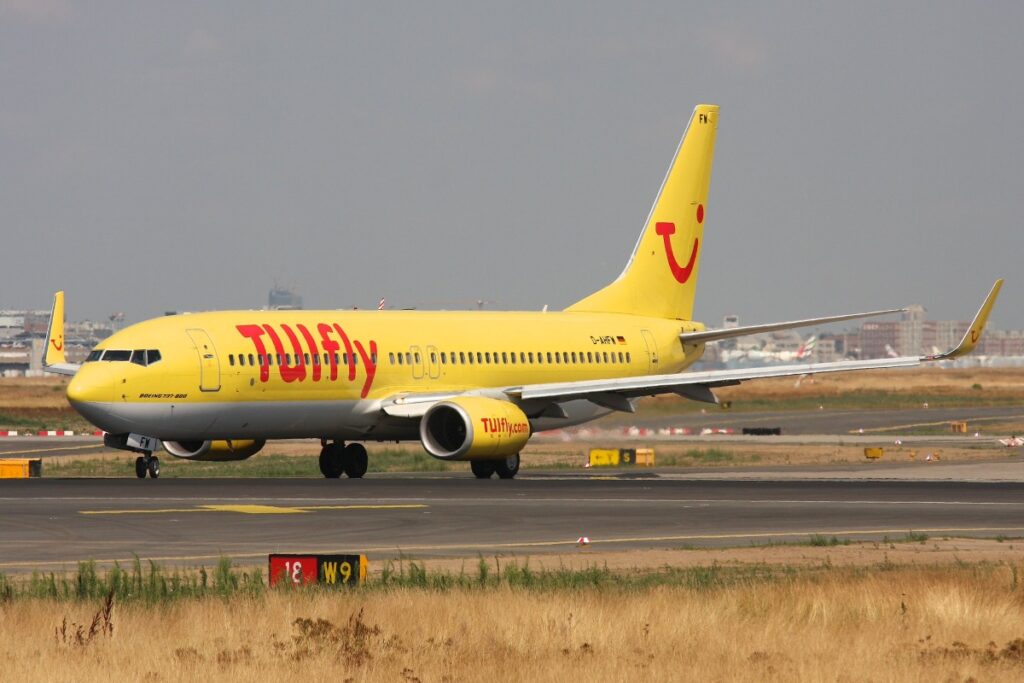
Photo: Colin Cooke
By the middle of the 2000s, TUI’s airline portfolio had become a mixture of different historic names and newer brands.
In Germany, the solution was consolidation. Hapagfly and Hapag-Lloyd Express were brought together under the new TUI fly identity in January 2007.
After almost 35 years, the Hapag-Lloyd name disappeared from Germany’s passenger airline scene.
Yet there is a direct line between those original Boeing 727s of 1973 and the aircraft flying German holidaymakers for TUI today.
Three Airlines on One Boeing 737
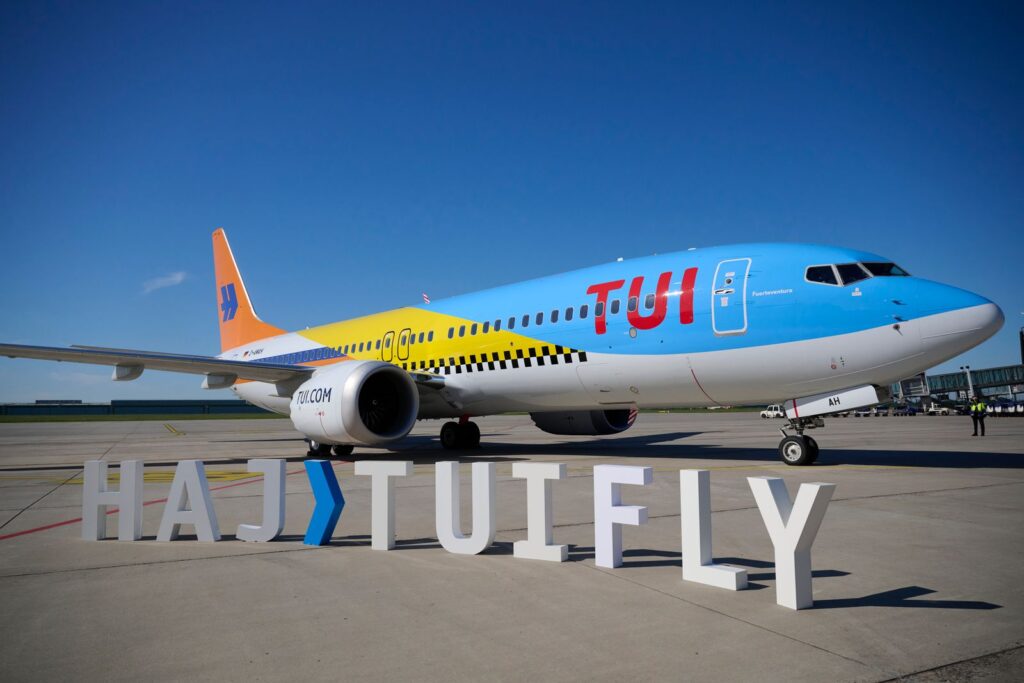
TUIfly Event Hannover, den 8.5.2024
Thankfully, TUI has not completely forgotten its heritage.
One of the most interesting aircraft in the present TUI fly Deutschland fleet is Boeing 737 MAX 8 D-AMAH.
In 2024 the aircraft received an extraordinary heritage colour scheme celebrating more than 50 years of the German airline operation.
Instead of choosing just one retro livery, TUI chose three.
The front of the aircraft wears today’s blue TUI colours. The centre section switches to the bright yellow taxi-inspired colours of Hapag-Lloyd Express. Finally, the rear fuselage and tail recreate the classic orange-and-blue Hapag-Lloyd Flug scheme.
It effectively turns the aircraft into a flying timeline.
For enthusiasts who remember seeing Hapag-Lloyd 727s, 737s and A310s around Europe, that orange tail is likely to bring back plenty of memories.
And it is a fitting reminder that, while the Hapag-Lloyd airline name may have disappeared, its aviation story is still very much flying.
Do you remember Hapag-Lloyd Flug? Did you ever fly aboard one of its Boeing 727s, 737s or Airbus A310s? Let us know your memories in the comments below.

