

Summary
The clock is now ticking for the Airbus A380 at Qantas.
Buried among the details of the Australian airline’s latest financial results is confirmation that Qantas expects to begin gradually retiring its Airbus A380 fleet from 2028, bringing the end of one of the most recognisable chapters in the airline’s long-haul history into view.
For aviation enthusiasts, it means there could now be only a few years left to experience – and photograph – Qantas’s famous red-tailed superjumbos in regular passenger service.
A380 Retirement Can Begin in 2028
Qantas announced the news as part of its FY26 results, which also outlined the huge fleet renewal programme currently underway across the group.
The airline took delivery of 17 new aircraft during the financial year, with as many as 31 more expected during the year ahead. Most significantly for its long-haul operation, Qantas is preparing to receive its first Airbus A350-1000ULR for the much-publicised Project Sunrise programme.
The first of these ultra-long-range aircraft is due to arrive in April 2027, ahead of the launch of non-stop Sydney-London flights later that year.
Alongside the 12 Project Sunrise A350-1000ULRs, Qantas has firm orders for another 12 A350s and 12 Boeing 787s. The additional Dreamliners are expected to start arriving during FY28.
It is this influx of new-generation widebody aircraft which will finally make the A380 surplus to requirements.
Qantas Group CEO Vanessa Hudson said:
“With our first Project Sunrise A350-1000ULR to arrive in April, and more A350s and 787s on the way, it’s a new era for Qantas’ international fleet… This means we can commence the retirement of our A380 fleet from 2028.”
Importantly, Qantas is not saying that all of its A380s will disappear in 2028. Instead, the airline says the type will be gradually phased out from that year, meaning some examples could potentially continue flying beyond 2028 as their replacements arrive.
Qantas and the Airbus A380
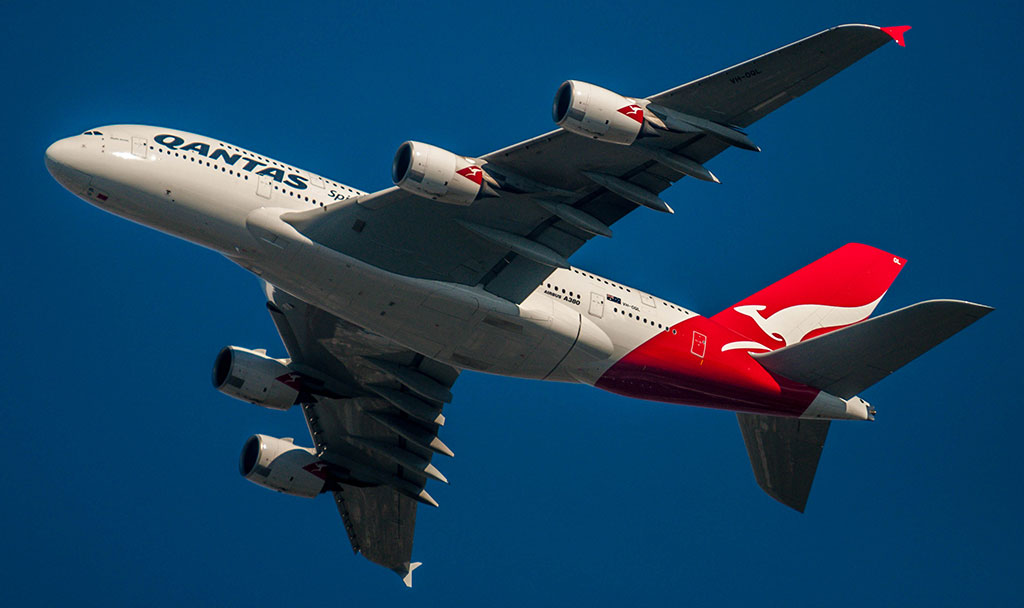
(Photo: Hpeterswald, distributed under a CC BY-SA 3.0 Licence)
Qantas has been one of the A380’s most prominent operators throughout the aircraft’s life.
Its first example, VH-OQA Nancy-Bird Walton, was delivered in 2008, with Qantas becoming one of the earliest airlines to introduce the double-decker Airbus into passenger service.
The airline ultimately received 12 A380-800s, powered by Rolls-Royce Trent 900 engines, despite initially having plans for a larger fleet.
The aircraft quickly became a flagship for Qantas and were deployed on some of its most important long-haul routes, particularly between Australia, Asia, Europe and the United States.
The A380 also became closely associated with the airline’s famous Kangaroo Route between Australia and London.
Qantas’s relationship with the aircraft has not always been straightforward, however. In November 2010, VH-OQA suffered an uncontained engine failure shortly after departing Singapore as Qantas Flight QF32. The aircraft landed safely, but the incident led to Qantas temporarily grounding its A380 fleet.
The Covid-19 pandemic presented an even bigger threat to the fleet when all 12 aircraft were placed into long-term storage at Victorville, California, in 2020, and for a time there were questions over whether the type would ever return to Qantas service.
But as international travel recovered, Qantas began bringing its A380s back from 2022 onwards.
Two aircraft – VH-OQE and VH-OQF – were ultimately withdrawn and dismantled for parts, leaving Qantas with ten A380s. The remaining aircraft have since returned to the operational fleet, giving the type an unexpected second chapter with the airline.
Where Can You See Qantas A380s Today?

For enthusiasts hoping to see or fly aboard a Qantas A380 before retirement begins, the airline currently lists five international destinations served by the type:
- Sydney – London Heathrow via Singapore – QF1/QF2
- Sydney – Los Angeles – QF11/QF12
- Sydney – Dallas/Fort Worth – QF7/QF8
- Sydney – Johannesburg – QF63/QF64
- Melbourne – Los Angeles – on selected services
This means the principal airports for seeing Qantas A380s at present are Sydney, Melbourne, Singapore, London Heathrow, Los Angeles, Dallas/Fort Worth and Johannesburg.
Aircraft assignments do change according to season and operational requirements, however, and Qantas itself warns that not every flight to these destinations is exclusively operated by the A380.
Sydney is naturally the best place to see the fleet, while Los Angeles remains another particularly good option thanks to A380 operations linking the airport with Australia.
The type is also an impressive sight at Johannesburg, where Qantas introduced the A380 on its Sydney route in 2024.
The Beginning of the End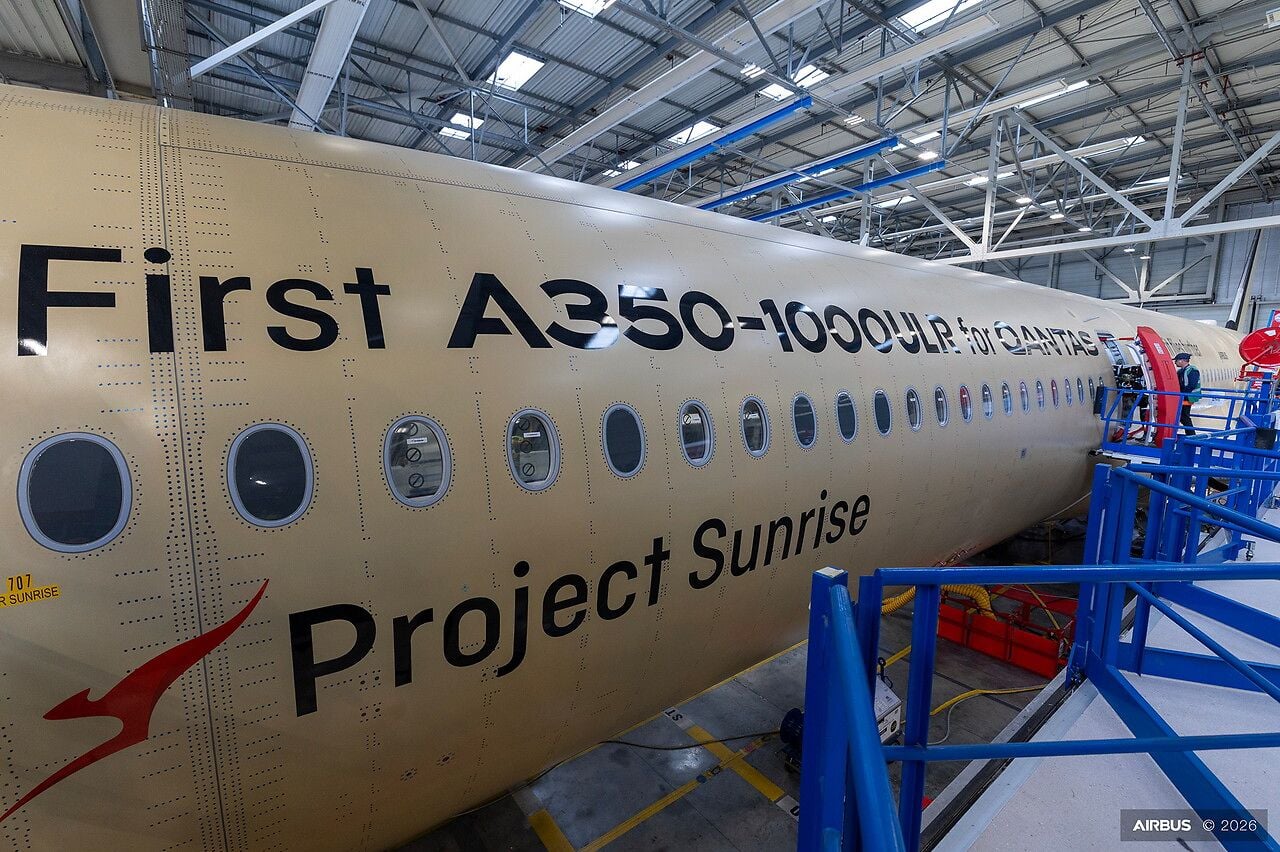
The A380 still offers Qantas something that even its newest aircraft cannot quite match: enormous capacity on busy long-haul routes.
But the economics of operating four-engined aircraft are increasingly difficult to justify alongside new-generation twinjets.
Qantas says the aircraft replacing the A380 will have enough range to operate every route on its existing international network, while also giving it the ability to open entirely new routes. The airline expects its fleet renewal programme to reduce operational complexity and improve the profitability of Qantas International.
The arrival of the A350-1000ULR will be particularly symbolic. While the A380 was designed around carrying huge numbers of passengers between major hubs, Project Sunrise represents a very different philosophy – smaller, highly efficient long-range aircraft capable of linking Australia directly with distant cities without an intermediate stop.
So while 2028 will not necessarily mark the final Qantas A380 flight, it now represents an important date for enthusiasts.
After two decades as one of the airline’s flagship aircraft, the gradual retirement of Qantas’s superjumbos is officially on the horizon.
If seeing – or flying on – a Qantas A380 is still on your aviation bucket list, the next couple of years could be a very good time to do it.

