
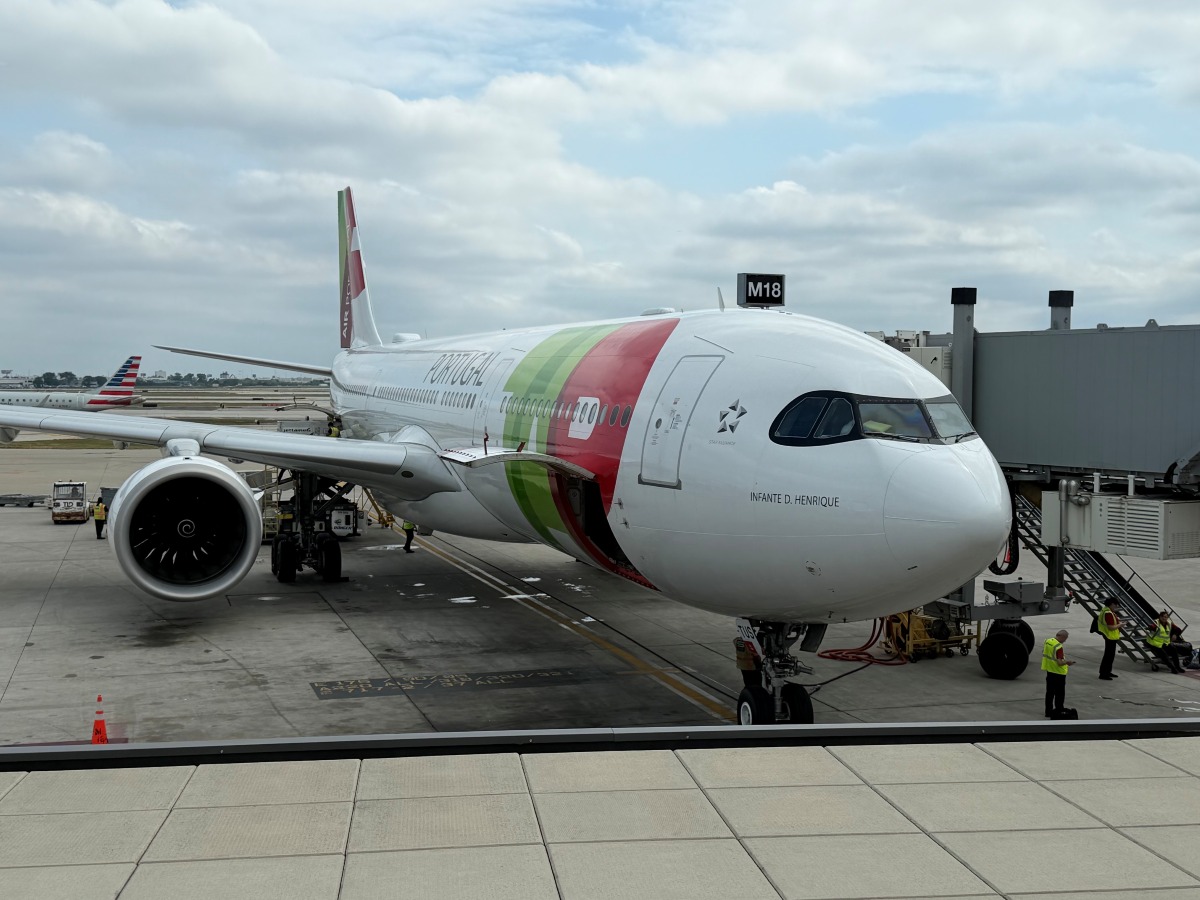
Summary
Portugal’s national airline TAP Air Portugal has developed into one of Europe’s most interesting network carriers, with a particularly strong presence on routes linking Europe with Brazil, Africa and North America.
Its location on the western edge of Europe gives TAP’s Lisbon hub a natural advantage for transatlantic flying, while its fleet is equally interesting for aviation enthusiasts. TAP was the launch operator of the Airbus A330-900neo and has embraced the long-range Airbus A321LR, allowing it to serve thinner transatlantic routes that would traditionally have required a widebody.
Now the airline is adding another attraction for plane spotters: a retro-liveried Airbus A330-900neo, recreating one of TAP’s classic colour schemes from the 1980s and 1990s.
Brief History of TAP Air Portugal

A TAP Caravelle aircraft.
TAP was founded on 14 March 1945 as Transportes Aéreos Portugueses, with commercial services beginning the following year.
Its first scheduled route linked Lisbon with Madrid, but international expansion quickly followed. One of its early flagship services was the lengthy Linha Aérea Imperial linking Portugal with its then colonies in Africa.
Over the following decades, TAP grew alongside Portugal’s expanding international connections. Its fleet evolved from Douglas DC-3s and DC-4s through Lockheed Super Constellations before entering the jet age with the Sud Aviation Caravelle.
The Boeing 707 subsequently allowed TAP to develop longer-range services, while later fleets included the Boeing 727, Boeing 737-200, Boeing 747-200, Lockheed L-1011 TriStar, Airbus A310 and Airbus A340.
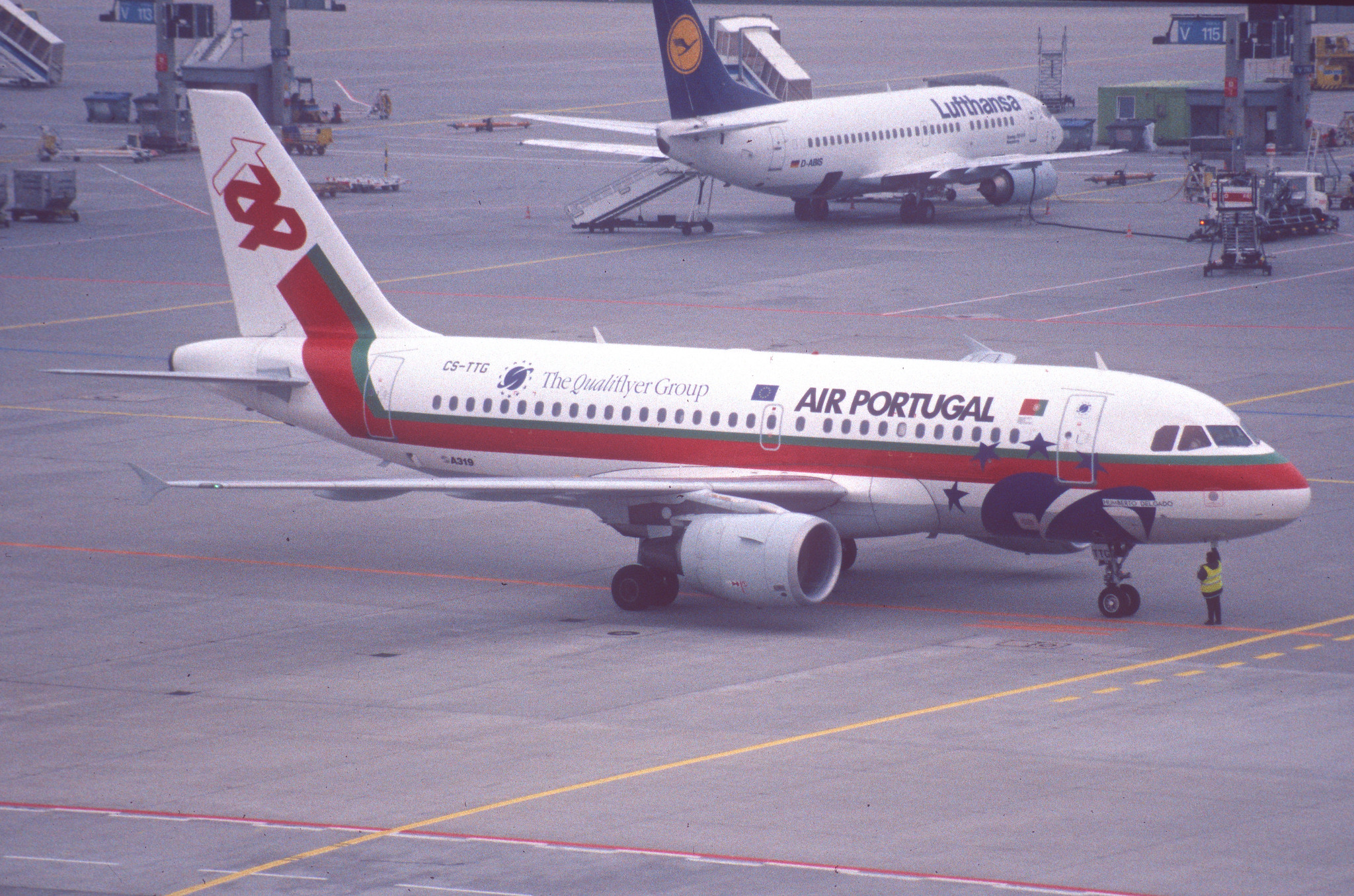
A TAP Air Portugal A319 with Qualiflyer Group titles. (c) Aero Icarus
Brazil became particularly important. TAP began operating to the country with its own aircraft in 1965, and in 1966 introduced a nonstop Lisbon-Rio de Janeiro service. Six decades later, Brazil remains one of the pillars of TAP’s network.
The airline increasingly standardised around Airbus aircraft from the 1990s onwards, introducing the A319, A320 and A321 for European services alongside the A310, A330 and A340 on longer routes.
In 2005, TAP became a member of Star Alliance, greatly expanding the connecting opportunities available to its passengers.
A particularly important moment came in 2018, when TAP became the world’s launch operator of the Airbus A330-900neo. The aircraft has since become the backbone of its long-haul fleet.
Current Bases and Operations
TAP’s main hub is at Lisbon Humberto Delgado Airport (LIS)
The airline also maintains an important operation at Porto Francisco Sá Carneiro Airport (OPO) and Madeira’s Funchal Airport (FNC) is another important point in the network.
Lisbon is overwhelmingly the centre of TAP’s operation. Its location makes it particularly well positioned for carrying connecting passengers between Europe and destinations across the Atlantic.
TAP operates an extensive European network feeding passengers into Lisbon, from where long-haul services spread west towards North and South America and south towards Africa.
Regional flights are also operated under the TAP Express brand by Portugália Airlines, principally using Embraer E190 and E195 aircraft.
Important and Notable Routes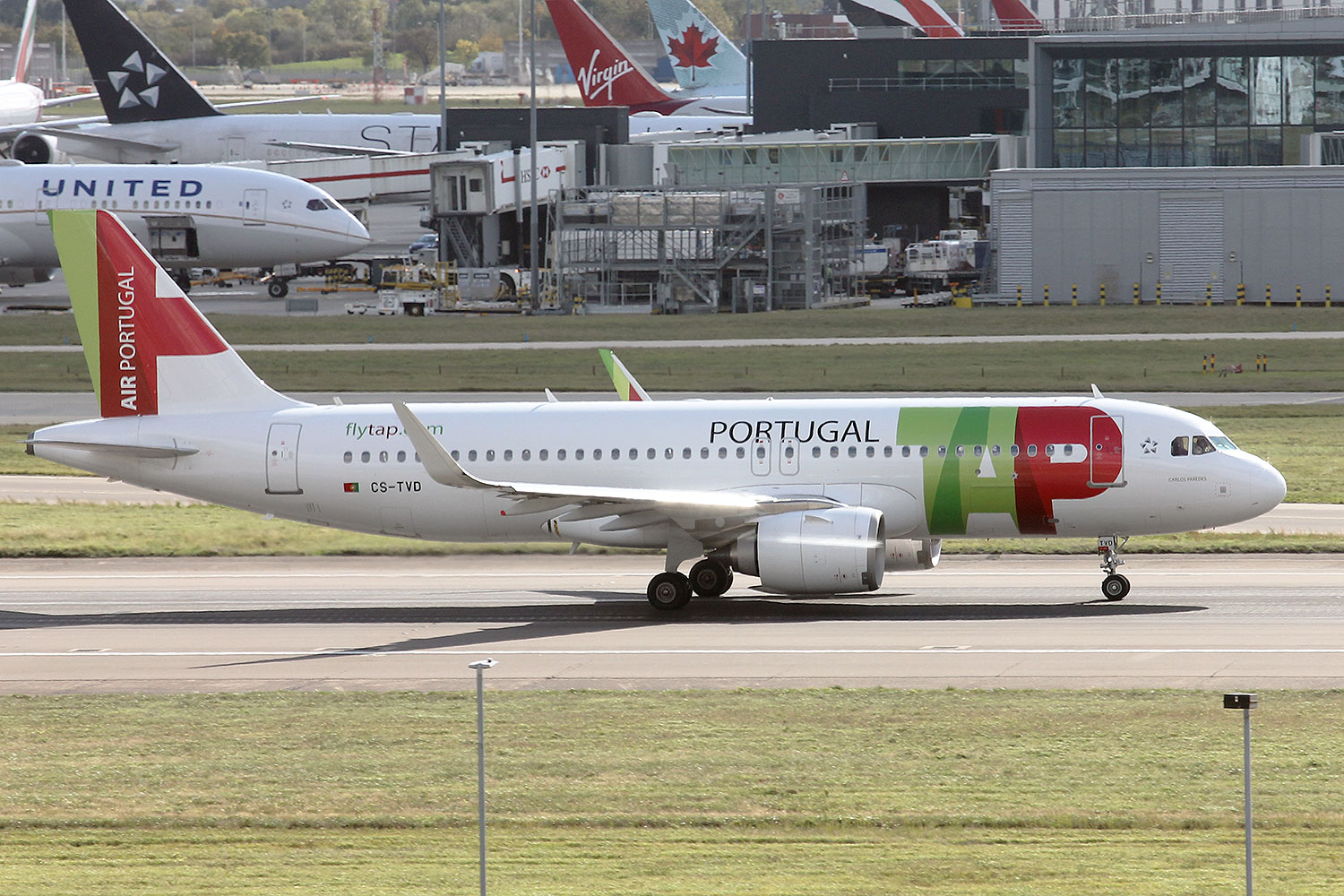
TAP’s most distinctive feature is undoubtedly its network to Brazil.
The airline describes itself as the leading carrier between Europe and Brazil, and in 2026 expected to carry around 2.1 million passengers between the two. Its Brazilian network encompasses cities including São Paulo, Rio de Janeiro, Brasília, Recife, Fortaleza, Salvador, Belo Horizonte and Porto Alegre.
This makes Lisbon an important connecting point for passengers travelling between Brazil and cities elsewhere in Europe.
North America has also grown substantially in importance. TAP serves destinations including:
- New York JFK
- Newark
- Boston
- Miami
- Washington Dulles
- Chicago O’Hare
- San Francisco
- Toronto
- Montreal
Some of these routes demonstrate the versatility of TAP’s fleet particularly well. While the A330neo handles major long-haul services, the Airbus A321LR can cross the Atlantic with only 168 passengers, allowing TAP to operate long, relatively thin routes that might not justify a conventional widebody. TAP quotes a range of around 7,400km for the type.
Africa is the other major component of the TAP network. The airline has a particularly strong presence in Portuguese-speaking markets such as Angola, Mozambique, Cape Verde, Guinea-Bissau and São Tomé and Príncipe, alongside services to other African countries.
Together, Brazil and Africa give TAP a network that is quite different from those of many other European flag carriers.
Fleet Overview
TAP is today overwhelmingly an Airbus operator, with Embraer regional jets flying for TAP Express.
Its fleet is particularly interesting because older-generation Airbus aircraft continue to operate alongside their neo replacements. This means enthusiasts can still find A319s, A320ceos and A321ceos while the newer A320neo family increasingly dominates.
As of summer 2026, TAP and TAP Express have a combined fleet of just over 100 aircraft.
Current Fleet
| Aircraft Type | Current Fleet* |
| Airbus A319-100 | 3 |
| Airbus A320-200 | 14 |
| Airbus A320neo | 19 |
| Airbus A321-200 | 3 |
| Airbus A321neo / A321LR | 24 |
| Airbus A330-200 | 3 |
| Airbus A330-900neo | 19 |
| Embraer E190 (TAP Express) | 12 |
| Embraer E195 (TAP Express) | 7 |
*Figures include aircraft temporarily parked and can change as aircraft are delivered, returned to lessors or withdrawn. Fleet data from August 2026 records 104 aircraft in the wider TAP/TAP Express fleet.
The A330-900neo is TAP’s principal long-haul aircraft, seating 298 passengers in the airline’s standard configuration. Meanwhile, the A321LR has become an unusually important part of its transatlantic strategy.
Aircraft on Order and Fleet Changes
Further Airbus aircraft are due to join the fleet, including additional A320neo/A321neo family aircraft and A330-900neos.
At the same time, the remaining A319s and older A320-family aircraft are becoming increasingly noteworthy for enthusiasts as the fleet transitions towards newer-generation equipment.
The A330-200 is another type worth watching. With only a handful remaining, its role is diminishing as TAP builds its A330neo fleet.
Airline Livery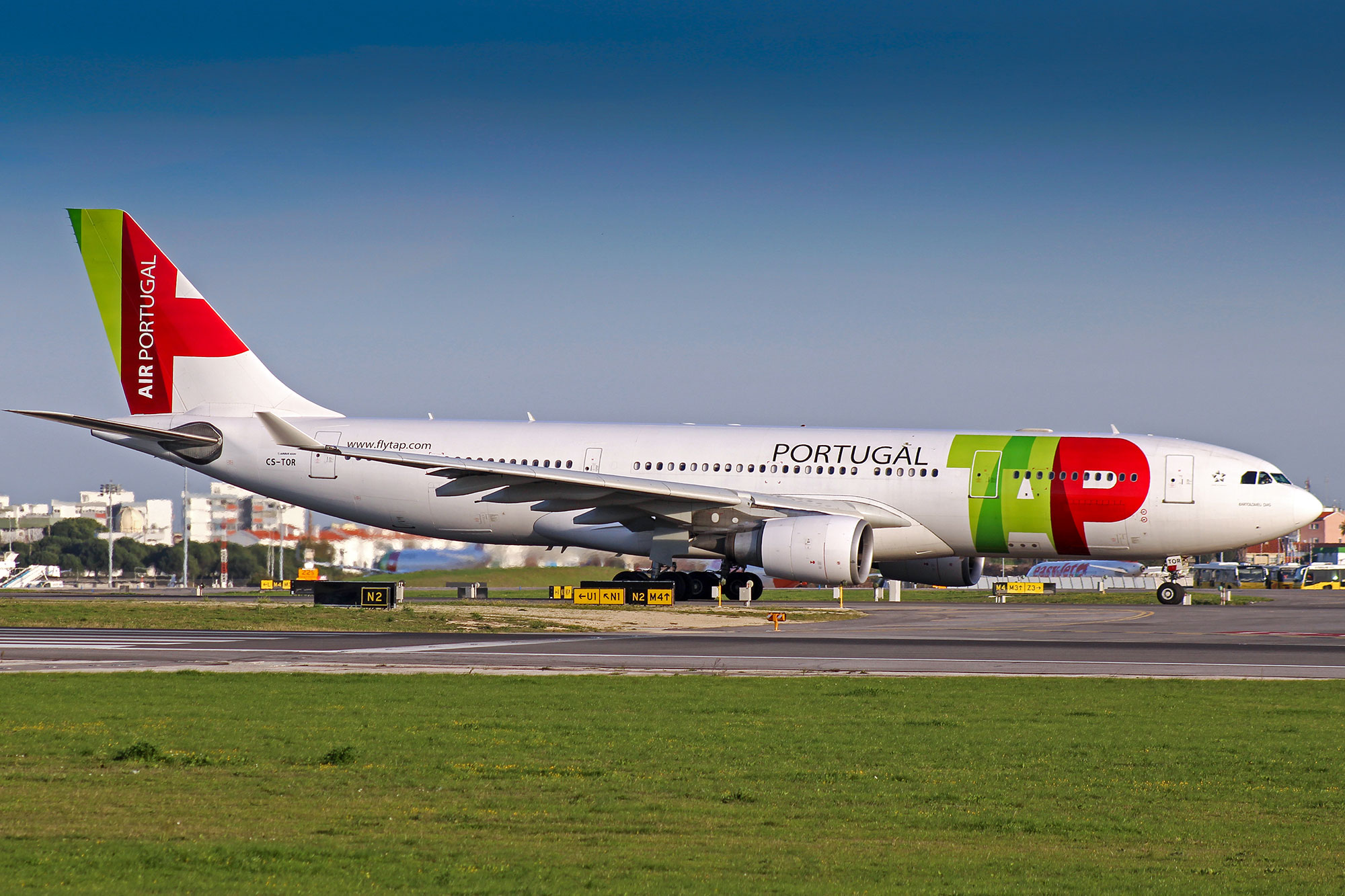
TAP’s current livery is unmistakably Portuguese and is dominated by the airline’s traditional red and green colours.
Aircraft have predominantly white fuselages with large TAP PORTUGAL branding towards the front. The TAP logo combines blocks of red and green, reflecting the colours of the Portuguese flag.
The tail is primarily white rather than being completely painted, with the red and green TAP branding extending across the rear fuselage and tail area.
Many of the airline’s newer aircraft also carry prominent “neo” branding, particularly around the rear fuselage, emphasising TAP’s adoption of Airbus’s new-generation aircraft.
For enthusiasts, the combination of a white fuselage, bold red and green tail markings and large TAP titles makes the airline relatively easy to recognise.
Special Liveries
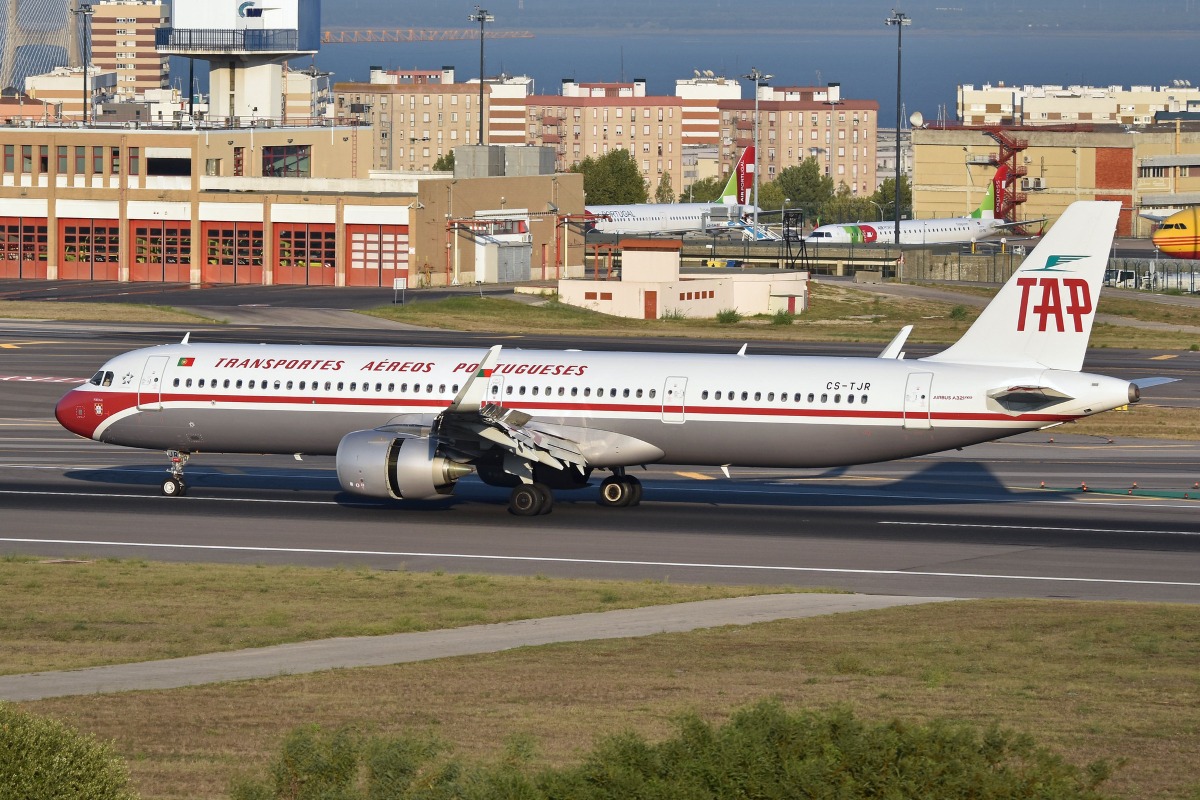
A321 CS-TJR in retro TAP livery. Photo: Alan Wilson
TAP has operated a number of interesting special schemes over the years, including aircraft promoting Portugal and its regions, Star Alliance colours and anniversary schemes.
One of its best-known aircraft in recent years has been the retro-liveried Airbus A321neo CS-TJR, which recreates TAP’s colours from the 1950s. The aircraft features a silver lower fuselage, white upper fuselage and classic red cheatline, together with historic Transportes Aéreos Portugueses titles.
But spotters now have another particularly interesting aircraft to look forward to.
New TAP Retro A330-900neo Coming

In summer 2026, a new Airbus A330-900neo destined for TAP emerged from the paint shop at Toulouse wearing a spectacular retro colour scheme.
The aircraft, CS-TUT, recreates TAP’s appearance from the 1980s and 1990s, providing a very different interpretation of the airline’s history from the existing A321neo retro jet.
It features the classic predominantly white appearance with the distinctive red and green cheatlines and historic TAP branding familiar from aircraft such as the airline’s Airbus A310s, A340s and Lockheed TriStars.
The aircraft, manufacturer’s serial number 2158, emerged from the Airbus paint shop in Toulouse on 17 July 2026 and is expected to enter the TAP fleet following completion and delivery.
For enthusiasts, it should immediately become one of the most sought-after aircraft in the TAP fleet – particularly as the scheme will appear on a modern A330neo rather than one of the aircraft originally associated with those colours.
The Future of TAP Air Portugal
TAP enters the second half of the 2020s in an interesting position.
Its fleet renewal has already transformed the airline. The A330-900neo has replaced much of its older widebody fleet, while the A320neo and A321neo families are gradually replacing older short- and medium-haul aircraft.
Growth opportunities remain particularly strong in Brazil and Africa, two markets where TAP has historical, linguistic and geographical advantages over many of its European competitors. The airline’s management has specifically identified both regions as areas offering further growth potential.
However, TAP’s ownership could also change. The Portuguese government has been pursuing a partial privatisation of the state-owned airline, attracting interest from major European airline groups. The outcome could have significant implications for TAP’s alliance membership, network strategy and future development.
Whatever happens with its ownership, Lisbon’s location and TAP’s unusually extensive Brazilian and African networks give the airline a distinctive position in European aviation.
And for plane spotters, the immediate future is especially interesting: newer A320neo-family aircraft are appearing alongside dwindling numbers of older Airbus jets, while the A330neo fleet is about to gain what should be one of Europe’s most attractive new retro liveries.

