
Summary
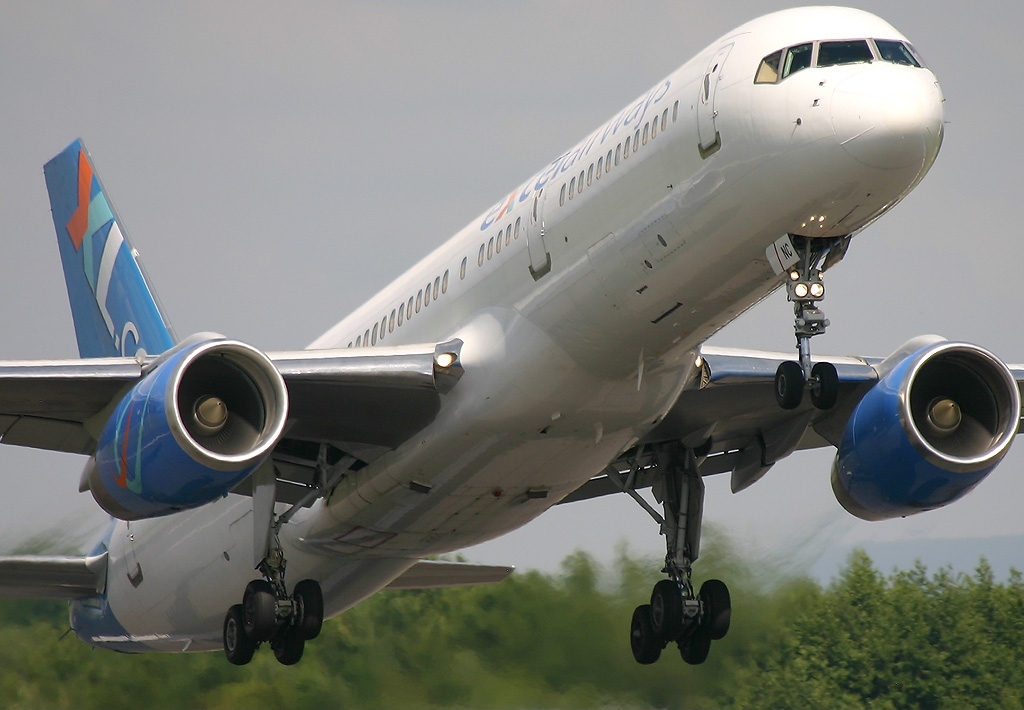
Ask any aviation enthusiast to name the most exciting commercial jet for take-offs, and chances are the Boeing 757 will be near the top of the list. With its sleek fuselage, tall landing gear, and powerful engines, the 757 became famous for its dramatic departures — often compared to a rocket launch.
For spotters, few sights are as thrilling as a 757 thundering down the runway and leaping skyward with an unusually steep climb. Here’s why this narrowbody’s take-offs became the stuff of legend.
Power in a Slim Package
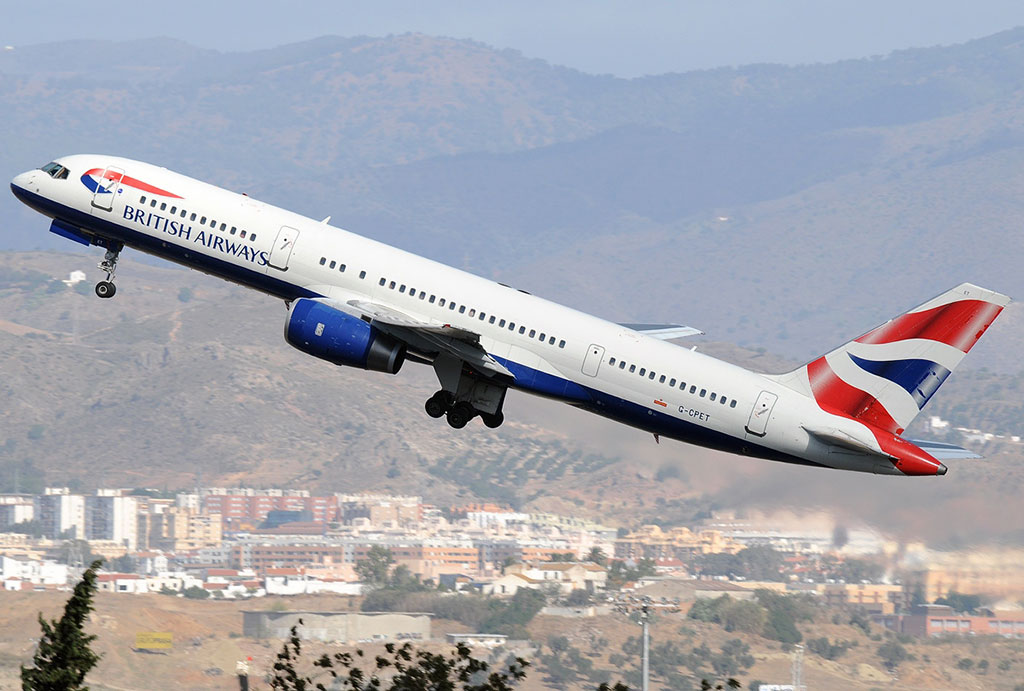
The Boeing 757 is known as the ‘pocket rocket’ due to its high thrust-to-weight ratio which leads to steep climb-outs after take-off as shown here by G-CPET departing from Malaga, Spain (Javier Bravo Muñoz, distributed under a GFDL 1.2 Licence)
The 757 was designed in the late 1970s as a replacement for the 727, but Boeing gave it engines normally found on widebodies.
- Rolls-Royce RB211-535s and Pratt & Whitney PW2000s delivered up to 43,000 pounds of thrust.
- At the same time, the aircraft’s relatively narrow fuselage and efficient wing design kept weight down.
This thrust-to-weight ratio meant the 757 had performance more akin to a fighter jet than a passenger narrowbody.
Short-Field Specialist
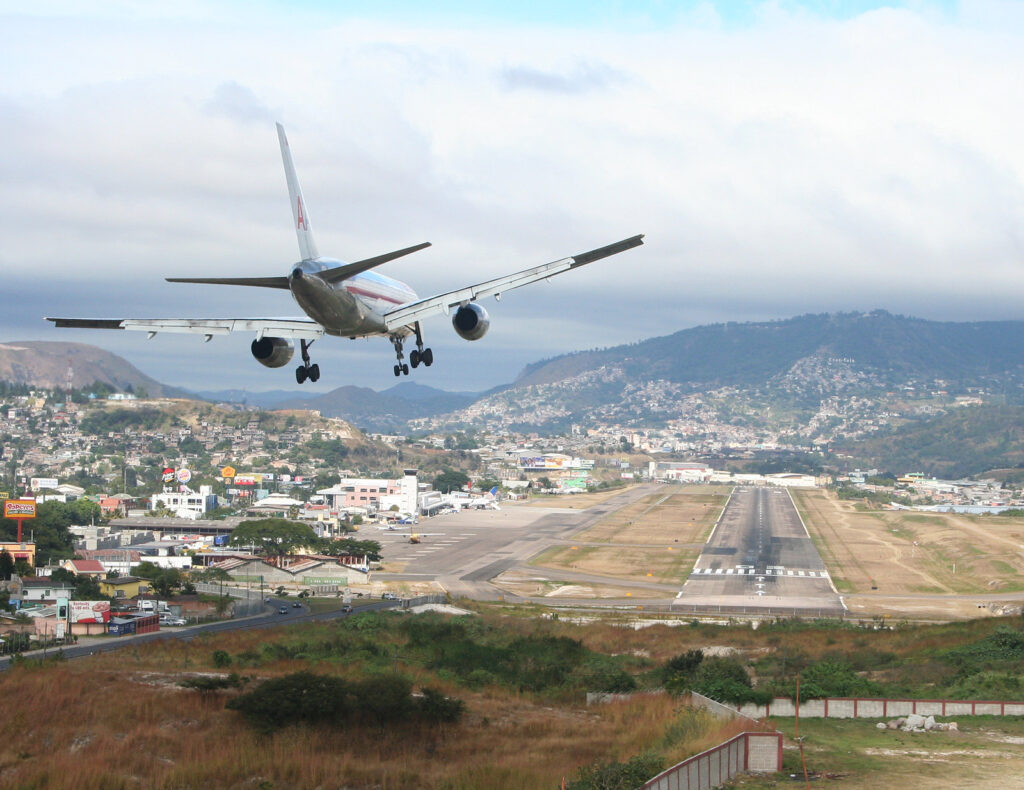
757 Landing at Toncontin. Photo (c)
One reason airlines loved the 757 was its ability to handle short and high-altitude runways that other jets couldn’t.
- It could operate from hot-and-high airports like Denver or Quito with ease.
- It also had no trouble lifting off from shorter regional fields, often producing those spectacular steep climbs.
For spotters at places like Madeira, St. Maarten, or LAX, the 757’s departures are among the most photogenic in commercial aviation.
The Spotter’s Experience
When photographing or filming a 757 take-off, enthusiasts often capture:
- Thunderous roar of the RB211 engines spooling up.
- Steep rotation angle compared to other narrowbodies.
- Rapid climb that leaves the runway behind in seconds.
It’s no surprise that 757 take-off videos are among the most replayed clips in spotting communities worldwide.
Still Flying — But Fading
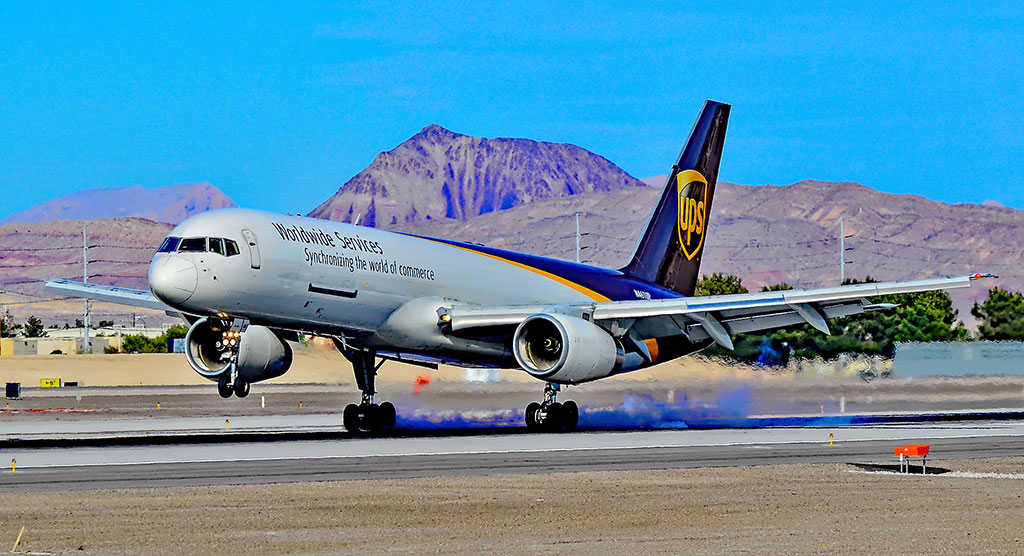
Boeing 757-24APF N461UP of UPS. (Tomás Del Coro from Las Vegas, Nevada, USA, licensed under CC BY-SA 2.0)
While many airlines have retired their 757 fleets, some still offer the chance to witness these legendary departures:
- Delta Air Lines – hubs like Atlanta and JFK.
- United Airlines – transatlantic services from Newark and Washington.
- Icelandair – Europe–North America flights via Reykjavik.
- Cargo carriers like DHL and FedEx – worldwide freighter operations.
For spotters, catching one of these take-offs in 2025 feels increasingly special.
A Jet That Earned Its Reputation
The Boeing 757 combined raw engine power, sleek aerodynamics, and short-field capability in a way no other narrowbody has. Its take-offs remain legendary not just for the performance, but for the experience they offer spotters: a visceral reminder of why aviation is so captivating.
If you’ve got a 757 on your radar, don’t miss the chance to watch — and hear — one of these iconic take-offs while you still can.
Boeing 757 Timelines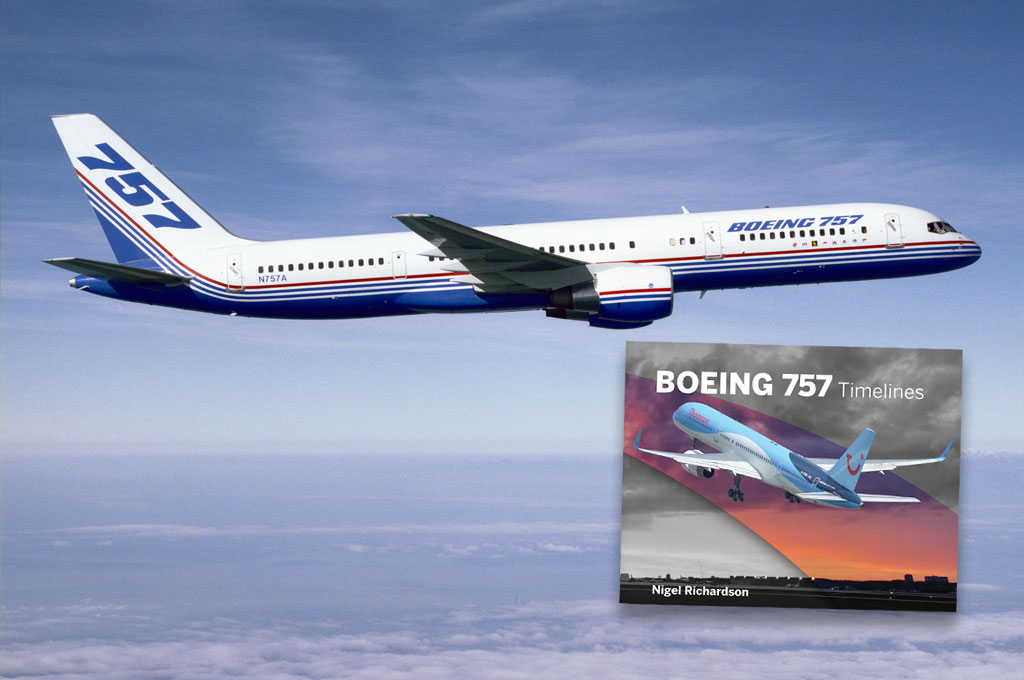
Our hardback book, Boeing 757 Timelines, charts the development and operational life of the Boeing 757 – one of the truly great airliner types of the past 40 years. See which airlines flew (and fly) it, the special variants, cargo operators and VIP uses. Also includes a special look at the British Airways and Jet2 757 fleets.
Boeing 757 Timelines by Nigel Richardson. Order Here.


3 comments
I was invited to view/board a brand new 757 (in Boeing colours) by a member of Servisair staff (now Swissport) at EMA when she spent a few days on the ground in order that Rolls-Royce Derby staff (where the RB211 turbofan was designed/built) could examine their newly designed product.
[…] Source: https://www.airportspotting.com/why-the-boeing-757s-take-offs-are-legendary/ […]
Myself and my family flew BHX to MCO on an Air Europe 757 – this being our first ever transatlantic flight – in Spring 1992.
We called into Bangor, Maine to refuel on the outbound flight but flew non-stop return.