
Summary
 Bristol Airport sits at Lulsgate in the hills south of the city, serving the wider South West of England. Despite having just one runway and a compact terminal, it has grown into one of the UK’s busiest regional airports, with a strong mix of low-cost, leisure, regional and business aviation traffic.
The airport has a long history, having evolved from a simple flying club base into a significant commercial hub. Today it handles millions of passengers each year and is an essential gateway for the West Country, Wales, and even parts of the Midlands. For plane spotters, Bristol offers a steady flow of interesting movements, a variety of airline types, and a couple of good vantage points around the field.
Let’s take a look at what you can expect from a visit.
Bristol Airport Layout
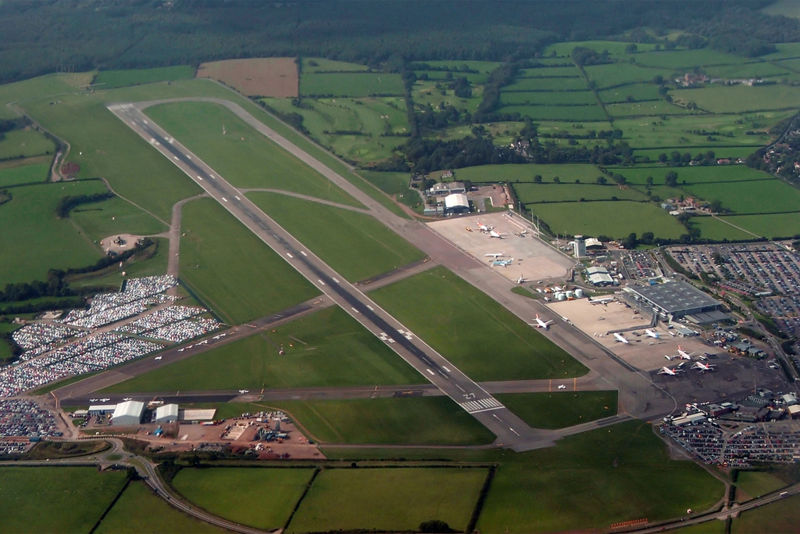
Tomccoll at the English Wikipedia, CC BY-SA 3.0 <http://creativecommons.org/licenses/by-sa/3.0/>, via Wikimedia Commons
Bristol has a single runway, 09/27, which measures 2,011 metres (6,598 ft) and runs east–west across the ridge where the airport is perched. The passenger terminal, parking stands and main apron areas are all located to the north side of the runway, forming a compact and modern layout familiar to anyone who has flown from here.
To the south, the remains of former cross runways are used for general aviation activities, including light aircraft, flying clubs, maintenance companies, and a number of executive jet operators. This area has its own aprons and hangars, separate from the commercial traffic, and is also where Bristol’s official plane spotting facility is located.
The airport’s infrastructure has expanded steadily with increased passenger numbers. While the single runway can occasionally cause bottlenecks during peak summer periods, movements are generally smooth and predictable, offering near-constant activity for spotters throughout the day.
What Aircraft You’ll See at Bristol

Bristol is primarily a low-cost and leisure airline hub, with several major operators basing aircraft at the airport. easyJet is by far the biggest, maintaining an extensive network of domestic and European routes using its Airbus A319 and A320 family fleet. Ryanair, Jet2 and TUI Airways also operate multiple services, especially during the summer months when charter flights and seasonal routes dramatically increase activity.
Alongside these, Bristol welcomes a good variety of regional operators. KLM Cityhopper, Loganair, and Aer Lingus Regional maintain daily links to their respective hubs. Aurigny connects the airport with the Channel Islands. SunExpress and Pegasus add additional links to Turkey.
During the summer season, traffic levels can be high, with a mix of Airbus and Boeing narrow-bodies dominating the schedule. Winter tends to be quieter, but still retains a solid stream of business flights, regional services and the occasional charter.
On the south side of the field, general aviation provides additional interest. Business jet movements can be quite frequent thanks to local charter activity, and numerous light aircraft fly in and out of Bristol’s flying clubs and training facilities. Maintenance firms also use the airport to handle visiting aircraft for engineering work.
Bristol does not really see any cargo flights of note.
The mix may not match the scale of larger UK airports, but Bristol offers satisfying variety and a predictable rhythm suitable for enthusiasts of all kinds.
Bristol Spotting Locations
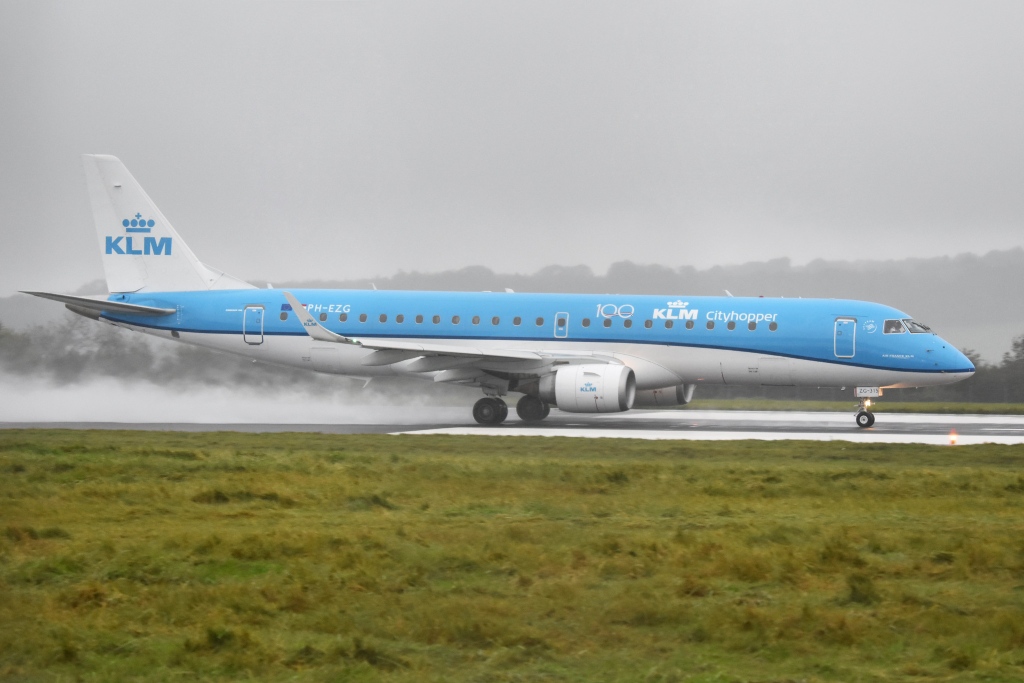
KLM Cityhopper Embraer 190 at Bristol from Winters Lane. Photo (c) Alan Wilson
Winters Lane (Runway 09 End)
One of the most popular unofficial spotting areas is Winters Lane, which runs around the eastern end of the runway. To reach it, drive north from the terminal on the A38, turn left onto Downside Road, then left again onto Cooks Bridle Path, signposted for Tall Pines Golf Club. Continue past the golf course and you’ll eventually reach the airport perimeter.
A small car park along Winters Lane allows views through the fence of aircraft departing or arriving on Runway 09. The vantage point gives a close-up perspective, especially when aircraft are lining up or backtracking. Photography can be challenging without a step ladder due to fencing height, but it remains a favourite among local spotters.
Perimeter Paths and Fence Lines
While Bristol lacks a broad choice of official viewing areas, various stretches of the perimeter fence offer glimpses of movements, particularly along the southern boundary near the general aviation aprons. These spots are more useful for logging than photography, but they can help fill in gaps between visits to the Flight Lounge or Winters Lane.
South Side Flying Clubs
The best official location for watching aircraft at Bristol was the Flight Lounge, situated on the south side of the airport at the flying club. However, this has recently closed. There are still some limited views from the car parks in this area, which is useful for logging any biz jets parked up, but it is not good for photography. To reach it, follow the perimeter road from the terminal toward the Silver Zone Car Park, where you’ll see signage for the club.
Is Bristol Worth Spotting At?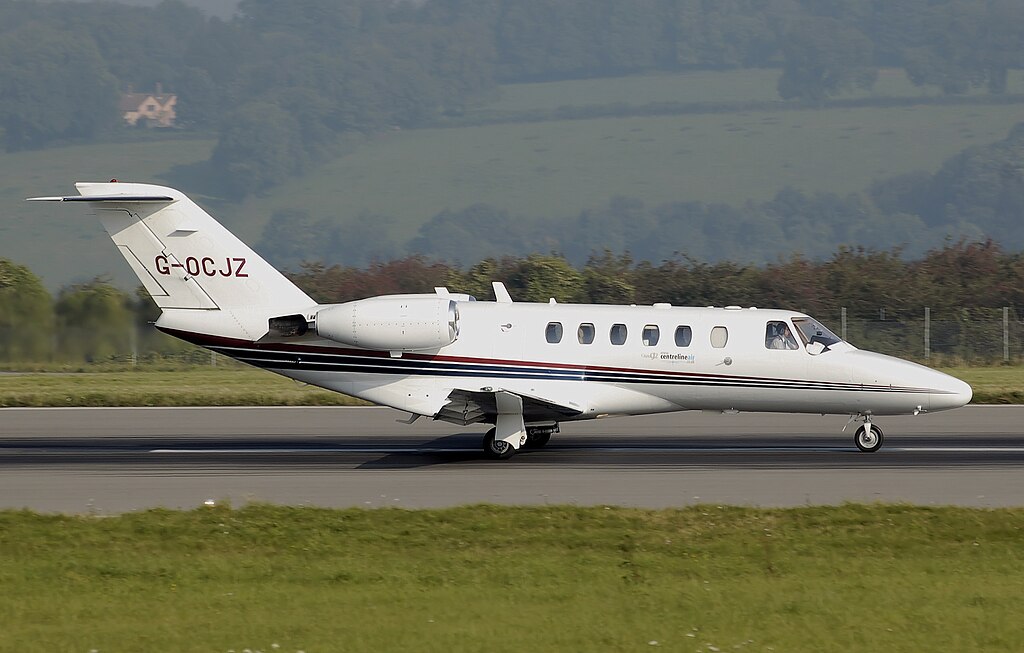
Bristol Airport may not be the UK’s busiest hub, but it offers an acceptable spotting experience with a reliable mix of low-cost operators, charter flights, regional links and general aviation. The layout is simple to understand, and the Winters Lane spotting area offers good close-up view of runway action.
However, Bristol is not as busy or varied as some similar regional airports, like Birmingham, Luton or East Midlands, which may offer a better alternative.
What are your thoughts? Have you been plane spotting at Bristol? Was it worth it? Do you know any other good spots to try? Leave a comment below!
Airport Spotting Guides UK & Ireland
If you want more information on the best plane spotting locations at airports like Bristol, check out our excellent guide book, Airport Spotting Guides UK & Ireland. It includes details of where to spot and photograph aircraft, with directions, plus information about what you’ll see, at 150 different airports, general aviation and military airfields across England, Scotland, Northern Ireland, Wales, Channel Islands and the Republic of Ireland.
Title image: James



1 comment
[…] Source: https://www.airportspotting.com/bristol-airport-plane-spotting-guide/ […]