

Summary
For many British aviation enthusiasts, the sight of a BAC One-Eleven evokes memories of the golden age of short-haul jet travel. The distinctive rear-mounted engines, T-tail, and compact proportions made the aircraft one of the defining European airliners of the 1960s, 70s and 80s.
Now, however, the number of surviving complete examples in the UK has fallen yet again.
News has emerged that BAC One-Eleven G-AVMO, previously displayed at the National Museum of Flight, has been dismantled and removed from the site after years of outdoor exposure and deterioration. The aircraft’s forward fuselage has since been transported to Cotswold Airport, where it currently sits in the airport’s scrapping area alongside numerous retired modern airliners awaiting disposal.
Its long-term future remains uncertain, and enthusiasts fear that what remains of the aircraft could ultimately face the scrapyard as well.
A Sad End For A Scottish Survivor

The sad remains of G-AVMO at Cotswold Airport. Photo: Steve Knight
The museum reportedly concluded that the aircraft had deteriorated beyond what could realistically be repaired within available budgets and resources. Like many preserved airliners displayed outdoors in the UK climate, corrosion and weather damage had taken their toll over decades.
While many enthusiasts understand the practical realities of preserving large historic aircraft, the removal of G-AVMO has sparked disappointment and debate across the aviation community. The BAC One-Eleven was once one of Britain’s most important commercial aircraft programmes, yet surviving examples are now becoming increasingly rare.
The situation has raised uncomfortable questions about the future preservation of Britain’s post-war jetliners and whether more could be done to protect them before they become impossible to restore.
Only Two Complete BAC One-Elevens Remain In The UK
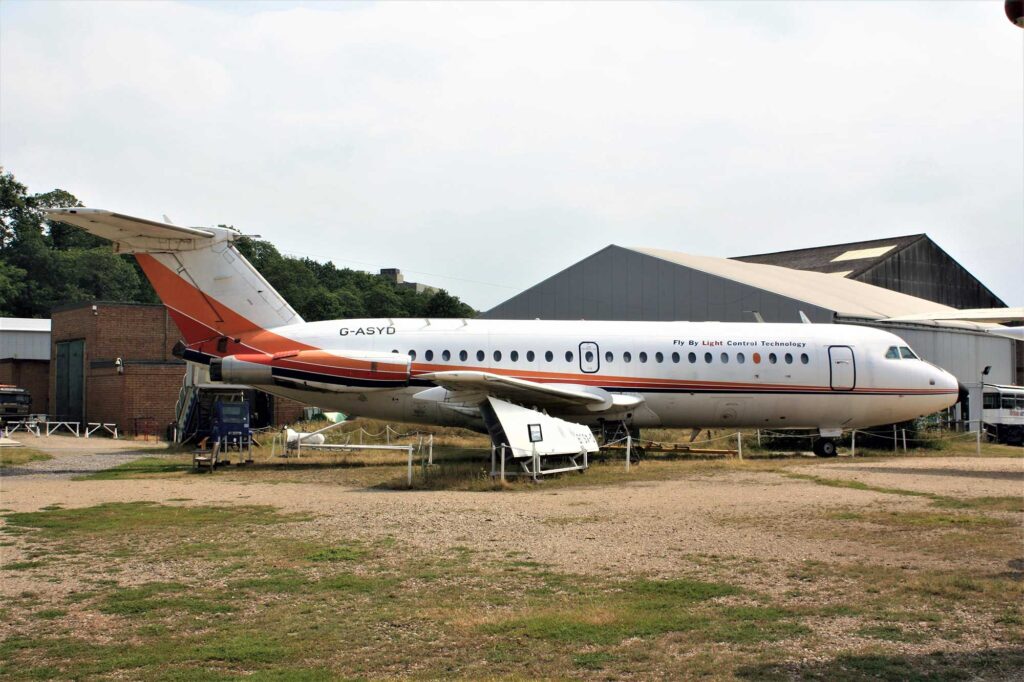
BAC 1-11 prototype G-ASYD at Brooklands Museum.
With G-AVMO now dismantled, only two complete BAC One-Eleven airframes are believed to remain preserved in the UK.
One is held by the British Airliner Collection at Imperial War Museum Duxford, while the other is one of the aircraft’s original prototypes preserved at Brooklands Museum.
Interestingly, both aircraft have also spent many years displayed outdoors, yet remain in relatively good condition thanks to ongoing preservation work and active care from volunteers and museum staff.
A handful of partial fuselages and cockpit sections survive elsewhere in Britain, but complete BAC One-Eleven aircraft are now extremely uncommon.
Britain’s Short-Haul Jet Pioneer
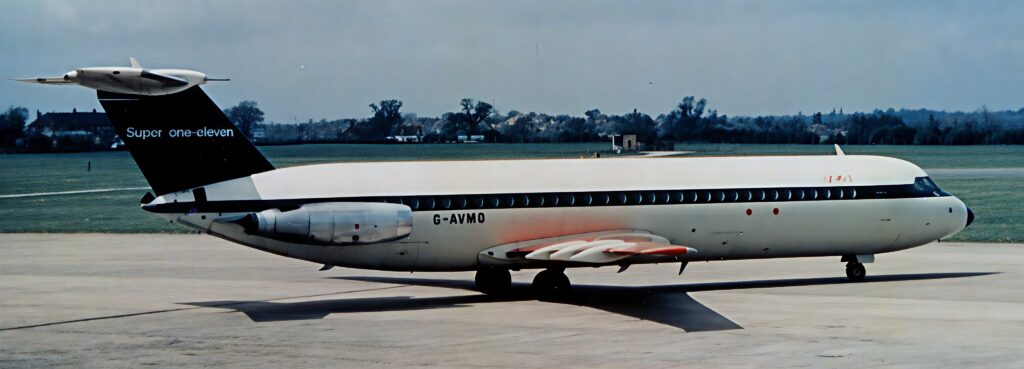
G-AVMO early in her career, flying with British European Airways. Photo: Steve Knight
Developed by the British Aircraft Corporation during the early 1960s, the BAC One-Eleven was Britain’s answer to the growing demand for short-haul jet transport.
The aircraft first flew in 1963 and quickly became popular with airlines around the world thanks to its strong performance, simple design and ability to operate from relatively short runways. It was among the first successful short-haul twinjet airliners and helped shape the future of European regional and domestic flying.
Various versions were produced, ranging from the early Series 200 aircraft to the stretched and more capable Series 500.
The type became particularly well known in the UK through operators such as British Airways and its predecessors, including British European Airways. For decades, the BAC One-Eleven was a familiar sight at airports across Britain and Europe, operating domestic trunk routes and European services from airports including Heathrow, Manchester, Birmingham and Glasgow.
Its distinctive engine howl became part of the soundtrack of British aviation during the 1970s and 80s.
Other major operators around the world included American Airlines, Braniff International, Mohawk Airlines, Court Line, British Caledonian and Ryanair during its earliest years.
The Last Flying Examples
Although the BAC One-Eleven disappeared from mainstream airline service many years ago, a small number continued flying in more remote operations into the 2000s and 2010s.
The last known active example is believed to have flown in the United States in 2019, where a modified aircraft operated as a testbed for military systems trials. Following its retirement, the type effectively disappeared from operational service worldwide.
That marked the end of a flying career spanning more than half a century.
A Difficult Future For Preserved Airliners
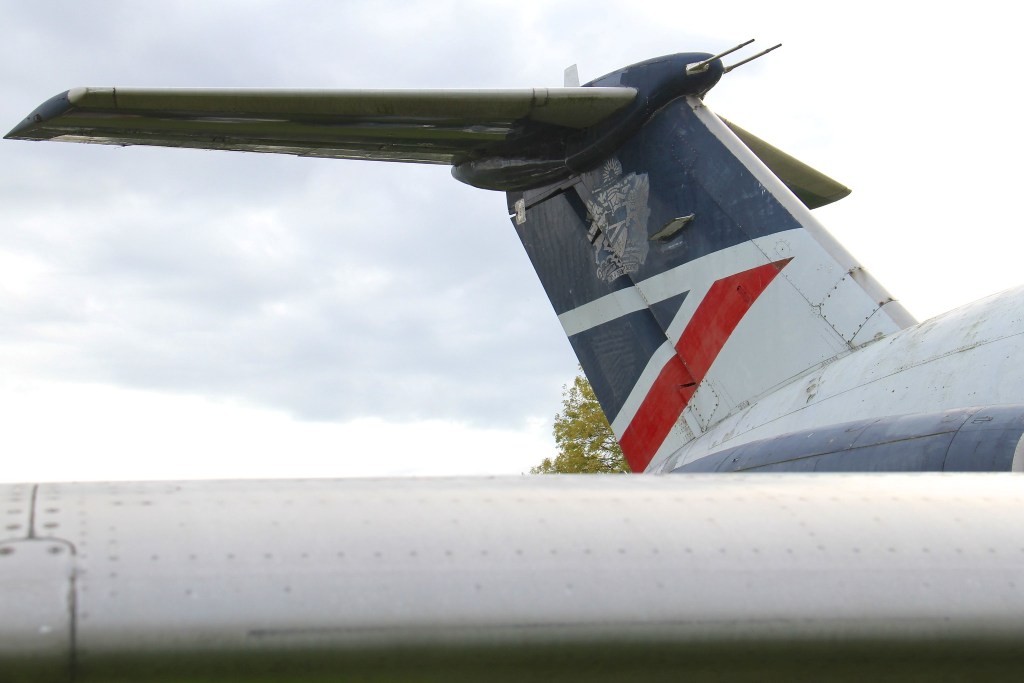
BAC 1-11 G-AVMO’s iconic tail. Photo: Ronnie Macdonald
The fate of G-AVMO highlights a growing challenge facing museums and preservation groups across Britain and beyond.
Large jet airliners are enormously expensive to maintain, particularly when stored outdoors in harsh climates. Corrosion, vandalism, water ingress and structural fatigue can rapidly turn restoration into an impossible task without substantial funding and volunteer support.
Yet aircraft like the BAC One-Eleven represent a hugely important chapter of British aviation history — not only as engineering achievements, but also as aircraft that millions of passengers once flew aboard.
For now, enthusiasts will be hoping the surviving remains of G-AVMO can still be saved in some form before another piece of British aviation heritage disappears forever.
Have you ever flown on, photographed, or spotted a BAC One-Eleven? Share your memories in the comments below.
Title image: Timo Newton-Syms


6 comments
[…] This article was prepared by LibelulaFly as an independent aviation-news summary and editorial reinterpretation based on publicly available reporting. Images, when used, are included for editorial context with source attribution. Original source: http://www.airportspotting.com. Read the original article here: https://www.airportspotting.com/britains-bac-one-eleven-fleet-dwindles-further-as-scottish-example-b…. […]
DAN-AIR !!!
Court Line (Clakson Holidays) used to fly them and I’d see them when they diverted to Stasted (low could at LTN!). It was the pride of the cockpit crews in making sure that they were lined up on an imgainary line on the apron.
The other point with the 1-11 was the “fluttering” sound as the APU spun up the Speys – it always caught my atention.
Yes sad to see VMO being scrapped, harsh reality of leaving old airliners out in the open, especially frosty Edinburgh.
I had 34 BAC 1-11 flights altogether and quite a few travelling in the jump seat. Have seen both the Duxford and Weybridge aircraft recently and lets hope they continue to be around for a while yet.
With the removal of 1-11from Edinburgh, the future of Viscount 701 G-AMOG would have to be in grave doubt, mores the pity.
So sad to hear of yet another 1-11 going. I suppose it’s only a matter of time before they scrap TRD G-AWZS at Teeside too.
G-AVMO has now been moved to the Gatwick Aviation Museum 1 Jun 2026, forward fuselage only. So hopefully preserved for a little longer at least.
Also BAC-111 G-AVMT is still a complete fuselage (Missing tail and wings) and it is “preserved” at Cardiff Airport.