

Summary
An unmistakable shape in European skies flew for the last time today, as Airbus retired its final A300-600ST Beluga, bringing the curtain down on one of the most beloved specialist aircraft fleets in modern aviation.
BelugaST number five, registered F-GSTF, departed Bordeaux–Mérignac Airport at 09:16 UTC operating flight BGA2901, bound for Hawarden Airport, near Airbus’s wing production site at Broughton. The short hop across France and the Channel marked not just the end of an aircraft’s career, but the end of an era for Airbus’s original outsize transport workhorse.
Rather than being broken up for scrap, F-GSTF has a far more fitting future. Plans are in place for the aircraft to become an educational and training facility at Hawarden, where it will be used to inspire apprentices, students, and future aerospace engineers—allowing the famous smiling Beluga to continue contributing to Airbus’s story in a new way.
From idea to icon
The BelugaST’s story began in the 1990s, when Airbus needed a more capable solution to move large aircraft components—particularly wings and fuselage sections—between its European factories. The original answer was the A300-600ST, developed from the A300-600R and entering service in 1995, replacing the earlier Super Guppy turboprops.
With its hugely enlarged upper fuselage, the Beluga could carry payloads that simply wouldn’t fit inside conventional freighters. Its comical, whale-like appearance quickly made it one of the most recognisable aircraft in the world, earning it a loyal following far beyond aviation circles.
By 2001, the full five-strong BelugaST fleet was in operation, quietly becoming the backbone of Airbus’s internal logistics network. Day in, day out, the aircraft shuttled between sites such as Toulouse, Hamburg, Bremen, Saint-Nazaire, and Broughton—an unglamorous but utterly essential role that kept Airbus production lines moving.
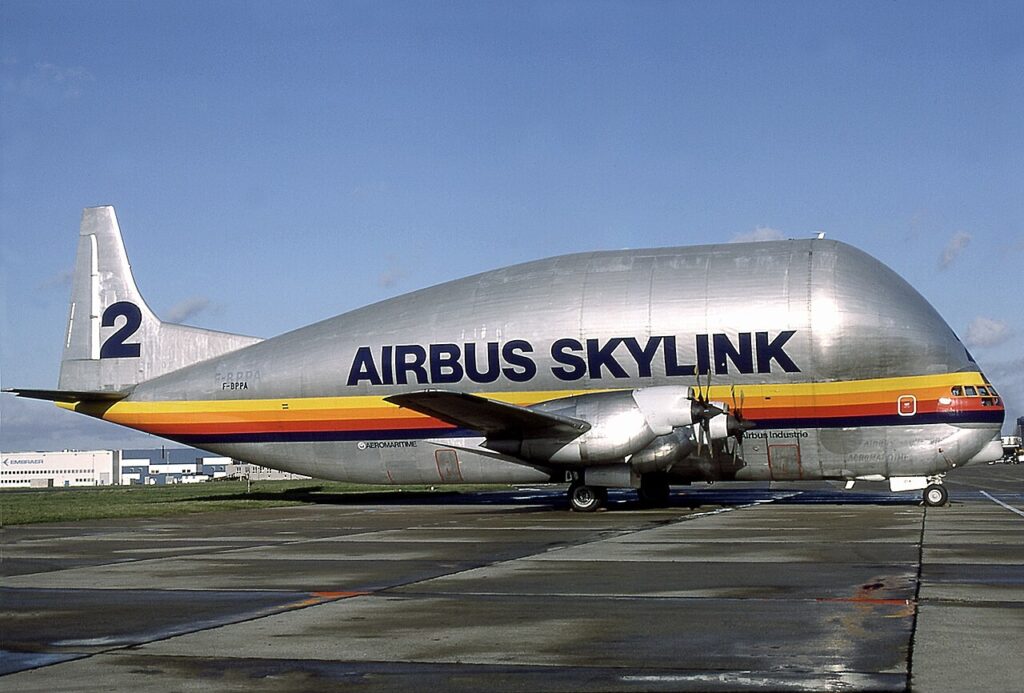
An earlier Super Guppy. Michel Gilliand (GFDL 1.2 <http://www.gnu.org/licenses/old-licenses/fdl-1.2.html> or GFDL 1.2 <http://www.gnu.org/licenses/old-licenses/fdl-1.2.html>), via Wikimedia Commons
More than just a parts hauler
Across nearly 25 years of service, the BelugaST fleet did far more than routine factory runs. The aircraft became known for special missions, transporting oversized cargo for space, humanitarian, and industrial projects that no other aircraft could handle with the same ease.
Yet it was the regularity of its work—and its constant presence over western Europe—that cemented the BelugaST’s place in aviation folklore. Spotters grew accustomed to its distinctive profile.
Passing the torch to the BelugaXL
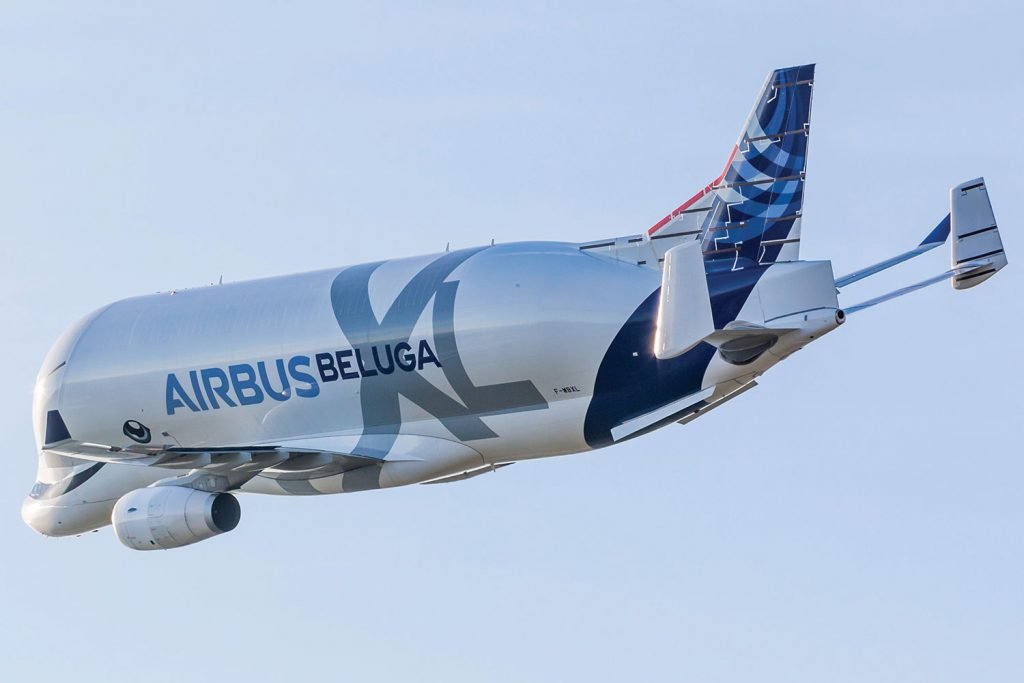
As Airbus aircraft grew larger, so too did the need for more capacity. That led to the development of the Airbus BelugaXL, based on the A330neo and capable of carrying significantly heavier and bulkier loads.
The first BelugaXL entered service in 2020, and today a fleet of six has fully taken over Airbus’s internal transport duties. With greater volume, payload, and range, the BelugaXL ensures Airbus’s production system remains future-proof—but even its impressive capabilities haven’t dulled the affection many feel for the original BelugaST.
A fond farewell, but not goodbye
Today’s the day! Last Beluga ST (F-GSTF) retires with a epic flypast at Broughton ~11am. Whale goodbye to the A300 classic after 30 yrs of legend status. BelugaXL takes over with 30% more room… two A350 wings at once! Insane upgrade. But nothing beats that classic bulbous look.… pic.twitter.com/iaWePV1Ylp
— Fahad Naim (@Fahadnaimb) January 29, 2026
With F-GSTF’s final landing at Hawarden, all five BelugaSTs are now retired from flying duties. But unlike so many specialist aircraft, at least one will remain accessible, tangible, and visible—its huge fuselage and instantly recognisable face continuing to spark curiosity and ambition.
For aviation enthusiasts and Airbus employees alike, the BelugaST will always represent a unique chapter in aerospace history: proof that sometimes the most important aircraft aren’t the fastest or the most luxurious, but the ones that quietly keep an entire industry moving.
Have you seen the BelugaST in flight—or photographed one over the years? Share your memories in the comments.
Title image: Victor


1 comment
[…] Source: https://www.airportspotting.com/an-icon-bows-out-the-final-flight-of-the-airbus-a300-belugast/ […]