
Summary
For years, the Airbus A319 occupied an important niche in the European manufacturer’s single-aisle family. It offered airlines the commonality of the larger A320 while providing fewer seats for thinner routes, making it popular with carriers such as easyJet, American Airlines, United Airlines, Lufthansa and British Airways.
When Airbus launched the A320neo family in 2010, it naturally included an updated A319neo. Yet, more than a decade later, the smallest member of the family has become little more than a footnote. Instead, the Airbus A220 has emerged as the aircraft of choice in the 100-150 seat market, to the point where Airbus executives are increasingly positioning it as the company’s smallest mainstream narrowbody, leaving the A319neo with only a tiny order book.
So why did this happen?
The A319neo Was Never Designed for This Market
The biggest challenge facing the A319neo is that it wasn’t designed from scratch.
Like the A318, A319, A320 and A321 before it, the A319neo is based on a fuselage that first flew in 1987. While the addition of new engines, sharklets and aerodynamic improvements significantly reduced fuel burn, the aircraft remained a shortened version of a larger design.
That brings inevitable compromises.
The aircraft carries much of the same wing, landing gear and systems as its larger siblings, meaning its structural weight is relatively high for the number of passengers it carries. Those costs are spread across fewer seats than an A320neo or A321neo, making the economics less attractive.
By contrast, the A220 was conceived specifically for this market.
Originally developed by Bombardier as the CSeries, it was designed around modern lightweight structures, advanced aerodynamics and Pratt & Whitney geared turbofan engines from the outset. Every aspect of the aircraft was optimised for carrying between around 100 and 150 passengers efficiently.
Airlines Want Efficiency Above All Else
For airlines, cost per seat is everything.
Although the A319neo delivers substantial fuel savings over the previous-generation A319ceo, it simply cannot match the purpose-built efficiency of the A220 on many missions.
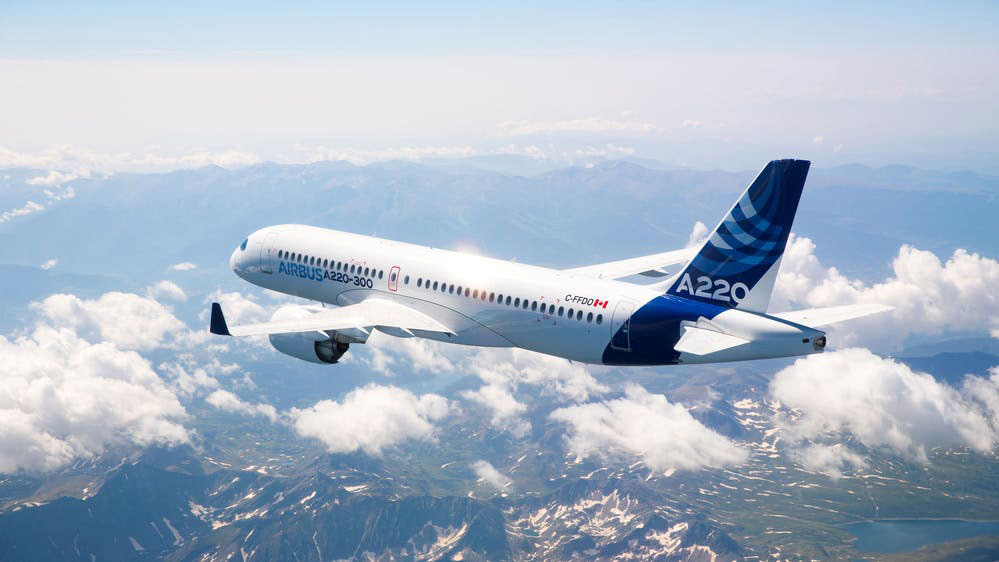
The A220 is lighter, burns less fuel per passenger on typical short- and medium-haul sectors, and offers lower operating costs in the market segment that both aircraft target. For airlines looking to replace ageing Airbus A319s, Boeing 737-700s, Embraer 190s or regional jets, the A220 increasingly became the obvious choice.
Passengers Prefer the A220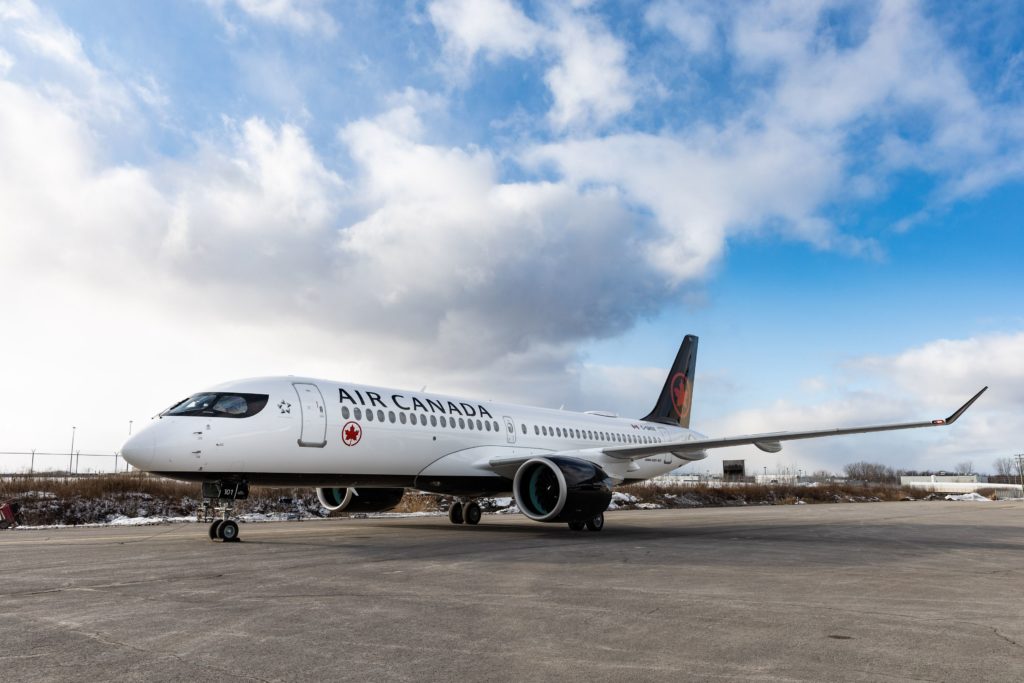
The A220 hasn’t just won over airlines, it has also become a favourite with passengers.
Its five-abreast cabin (2-3 seating) means there is only one middle seat in each row, while wider seats, larger windows, lower cabin noise and generous overhead bins create a noticeably more modern travelling experience.
Airbus says the A220 consistently achieves some of the highest passenger satisfaction scores among airline fleets, making it attractive not only for operating economics but also for customer experience.
The Market Has Moved Upwards
Ironically, another factor has worked against the A319neo: airlines now want larger aircraft.
As airports become busier and pilot shortages persist in many regions, airlines increasingly maximise each slot by using larger aircraft.
Within Airbus’ own product line, the A321neo has become the runaway success story, attracting the majority of new orders, while the A320neo continues to dominate the middle of the market.
The A319neo has effectively been squeezed from both directions.
Airlines needing around 140 seats increasingly favour the A220-300, while those wanting more capacity simply move up to the A320neo or A321neo. There is very little room left in the middle for the A319neo.
Orders Tell the Story
Perhaps the clearest evidence comes from the sales figures.
The A319neo has attracted only a handful of orders compared with its larger siblings, with several customers converting their commitments to larger A320neo-family aircraft instead. Today, only a small number are in airline service, primarily with operators in China.
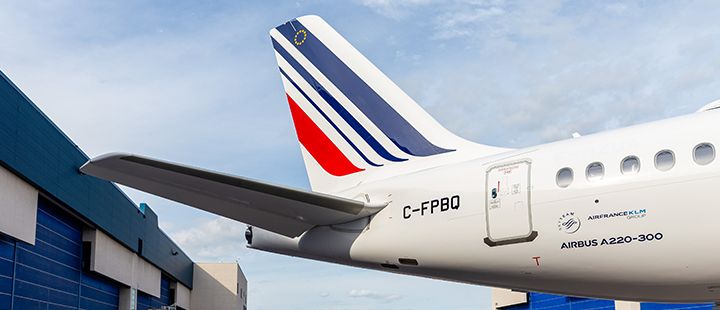
The A220, meanwhile, has enjoyed steadily growing success since Airbus took over the former Bombardier programme in 2018. The family has now surpassed 1,000 firm orders and is operated by airlines including Delta Air Lines, Air France, JetBlue, airBaltic, Swiss and Air Canada, with Airbus continuing to ramp up production.
Could the A220 Become Even More Important?
The A220’s influence may not stop here.
Airbus is actively studying a stretched A220-500, which would add around five additional rows of seating and move the aircraft closer to today’s A320neo in capacity. Airline interest has been strong, and Airbus has indicated it is evaluating what it describes as a relatively “simple” stretch once production of the existing variants reaches higher rates.
If launched, the A220-500 could place even greater pressure on the lower end of the A320neo family, reinforcing the A220’s position as Airbus’ dedicated aircraft for the smaller single-aisle market.
The Right Aircraft at the Right Time
The A319neo isn’t a poor aircraft. In many ways, it is exactly what Airbus intended it to be: a modernised version of a proven airliner.
The problem is that the market changed.
Airlines no longer wanted a shortened derivative when a clean-sheet alternative existed that offered lower operating costs, a better passenger experience and performance tailored specifically to the 100-150 seat sector.
For Airbus, acquiring the Bombardier CSeries programme may prove to have been one of its smartest strategic decisions. Rather than forcing the A319neo to compete in a market for which it was never truly optimised, the manufacturer now has an aircraft purpose-built for the role.
As a result, the A220 hasn’t merely complemented the A319neo, it has effectively replaced it.

