

Summary
For aviation enthusiasts, some airlines are memorable not for their size or success—but for just how interesting they were.
Indonesia’s Merpati Nusantara Airlines was one of those.
While many carriers settle into a consistent fleet strategy, Merpati did the opposite. Over its lifetime, it operated one of the most diverse fleets in commercial aviation—ranging from rugged bush planes to jetliners, and from Soviet-era types to modern Boeings.
And that diversity tells a much bigger story.
Built to Connect a Nation
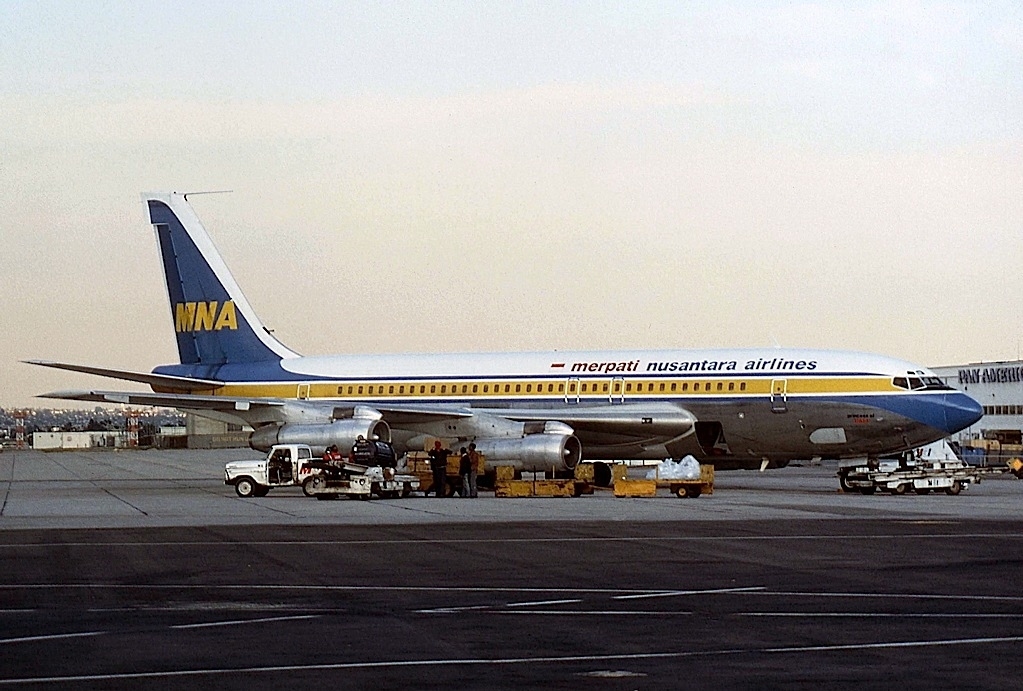
Jon Proctor (GFDL 1.2 <http://www.gnu.org/licenses/old-licenses/fdl-1.2.html> or GFDL 1.2 <http://www.gnu.org/licenses/old-licenses/fdl-1.2.html>), via Wikimedia Commons
Founded in 1962, Merpati wasn’t created to compete — it was created to connect. Indonesia is one of the most geographically complex countries in the world, made up of thousands of islands, many of them remote and difficult to access.
Merpati’s role was to act as an “air bridge,” linking isolated communities and supporting economic development across the archipelago.
That mission shaped everything about the airline — especially its fleet.
The Ultimate Mixed Fleet
Most airlines try to simplify their fleets. Merpati did the opposite.
Over decades of operation, it flew well over 200 aircraft, sourced from a wide range of manufacturers.
Its fleet included:
- Rugged STOL aircraft like the DHC-6 Twin Otter, and Pilatus Porter
- Regional turboprops such as the HS748, CN-235, NAMC YS-11 and MA60
- Classic jets including the Fokker F28, DC-9, and Boeing 737-200
- Even more unusual types like the Vickers Vanguard and BAe ATP
At one point, it operated everything from tiny bush aircraft landing on remote strips to jetliners serving major Indonesian cities.
This wasn’t by accident—it was necessity.
Flying Where Others Couldn’t
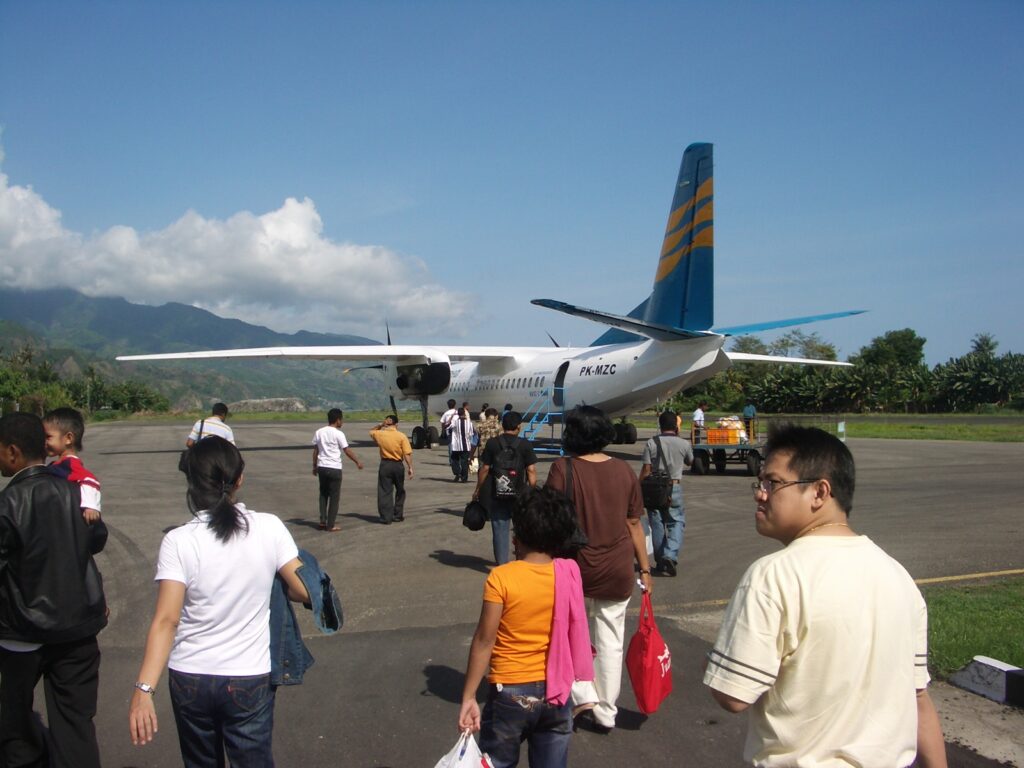
Photo: 1ieve
Indonesia’s geography meant Merpati had to operate in environments most airlines avoided.
Often this involved short, rough airstrips in amongst mountainous terrain, with limited infrastructure and unpredictable weather.
Aircraft like the Twin Otter and CN-235 were ideal for these conditions, while jets like the Boeing 737 were introduced as demand grew on busier routes.
A Fleet That Never Settled
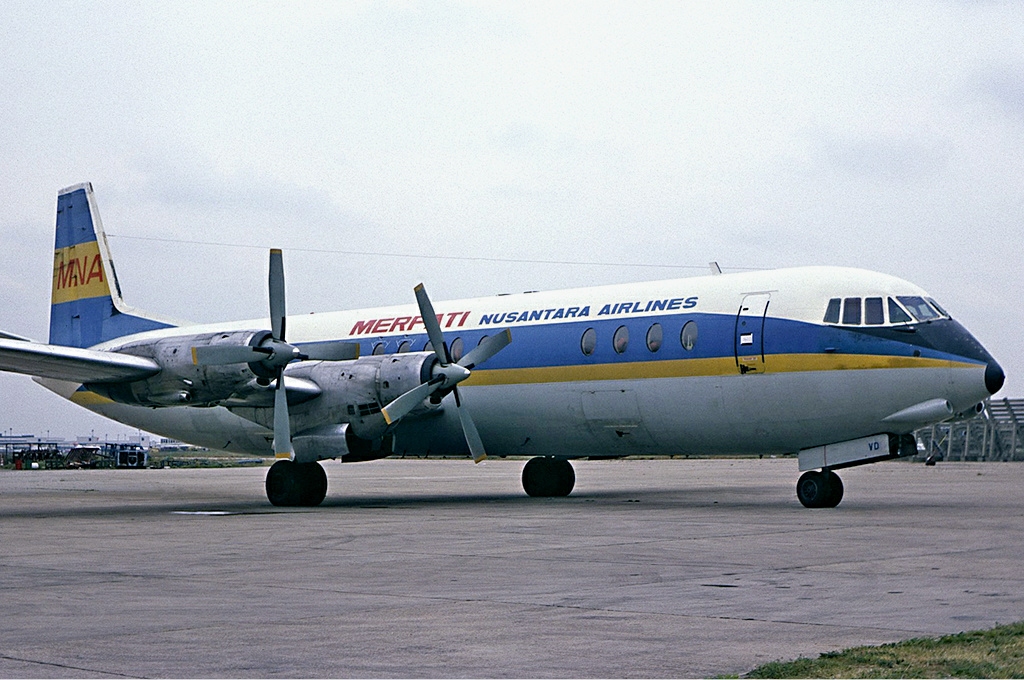
Steve Fitzgerald (GFDL 1.2 <http://www.gnu.org/licenses/old-licenses/fdl-1.2.html> or GFDL 1.2 <http://www.gnu.org/licenses/old-licenses/fdl-1.2.html>), via Wikimedia Commons
Even into the 2000s, Merpati remained one of the most varied operators in Asia.
By its later years, the fleet still included:
- Boeing 737-300/-400/-500
- Fokker 100
- Airbus A310
- Xian MA60 turboprops
That kind of mix is incredibly complex—and expensive—to maintain.
While it allowed flexibility, it also created long-term operational challenges.
The Downside of Diversity
Running such a varied fleet came at a cost:
- Maintenance complexity
- Training requirements for multiple aircraft types
- Higher operating costs
- Difficulty modernising efficiently
As Indonesia’s aviation market opened up to low-cost carriers, airlines with simpler, standardised fleets gained a major advantage.
Merpati, despite its unique role, began to struggle.
The Final Years
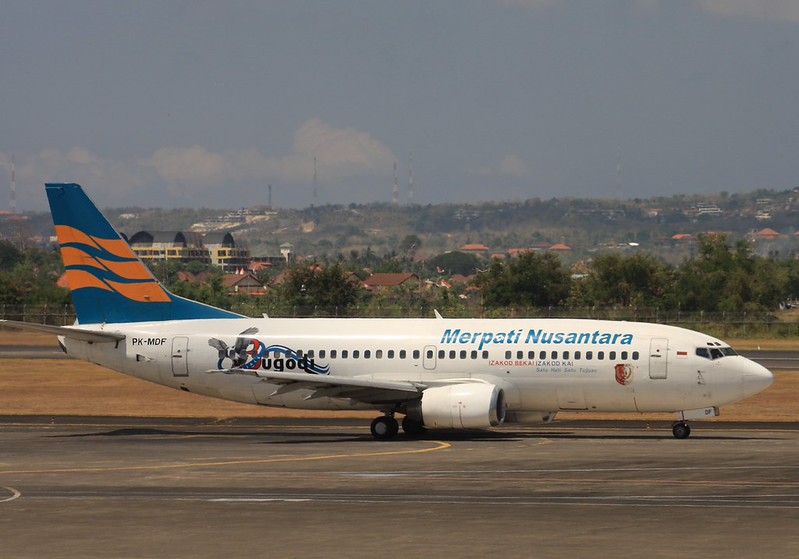
Merpati Boeing 737-300 in 2012. Photo: Andrew Thomas
By the early 2010s, financial problems had become severe.
In 2014, the situation reached a breaking point. The airline’s staff went unpaid for months and aircraft were regularly grounded.
Problem with fuel supplies due to cashflow problems meant flights were often cancelled.
Operations were suspended in January 2014, and despite attempts at restructuring, the airline never returned.
By 2022, its licence was officially revoked.
Despite this, there are still rumours that this classic Indonesian airline will be revived. Plans to operate modern types like the Airbus A320neo and Irkut MC-21 have been touted. But nothing concrete has ever emerged.
Explore More Lost Airlines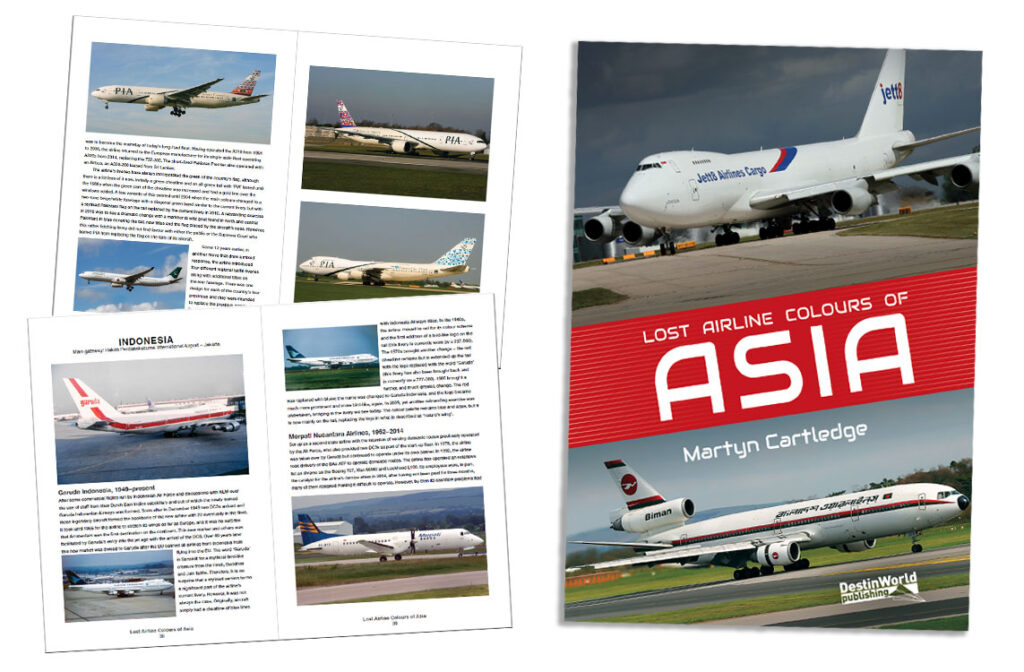
Merpati is just one of many fascinating stories from Asia’s aviation past.
You can discover more unique airlines, rare liveries, and forgotten operators in Lost Airline Colours of Asia.
Do you remember seeing a Merpati aircraft—or spotting any of its unusual fleet?
Drop your memories in the comments.

