

Summary
At first glance, the Boeing 737 MAX 10 and Airbus A321XLR look like direct rivals. Both are the largest members of their respective narrowbody families, both promise high capacity and improved efficiency, and both are pitched as replacements for older single-aisle and even some widebody routes.
But look a little closer and it becomes clear: these aircraft are designed for very different jobs:
One focuses on capacity and short-to-medium haul efficiency.
The other is built to rewrite the rulebook for single-aisle range.
Here’s how the 737 MAX 10 and A321XLR really compare — and why airlines are choosing one over the other.
The Big Picture: Capacity vs Range
The simplest way to understand the difference is this:
- The 737 MAX 10 is about moving more people efficiently on short-to-medium routes
- The A321XLR is about flying much further with a narrowbody than ever before
While Boeing and Airbus technically market them in overlapping segments, in reality they rarely compete head-to-head for the same routes.
Boeing 737 MAX 10: The Capacity King
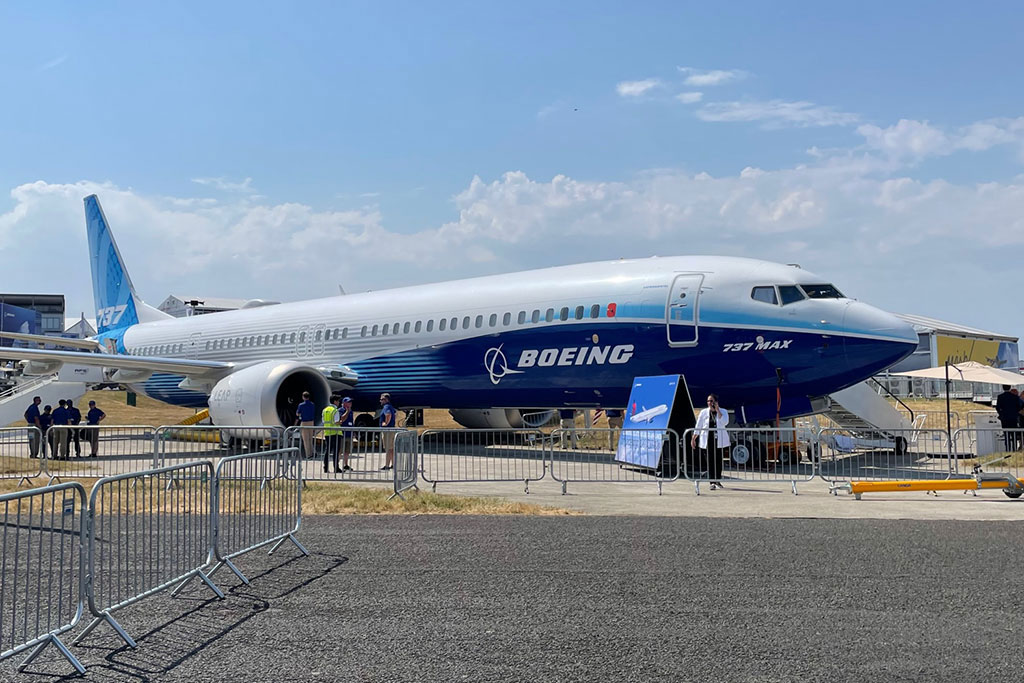
The prototype 737 MAX 10
The 737 MAX 10 is the longest and highest-capacity aircraft Boeing has ever built in the 737 family. It was designed primarily as a 737-900 and A321 replacement, rather than a long-range pioneer.
Key Characteristics
- Seats: typically 180–230 passengers
- Range: around 3,300 nautical miles
- Engines: CFM LEAP-1B
- Entry into service: still pending certification
The MAX 10 excels on:
- High-density domestic routes
- Short-to-medium European services
- Busy trunk routes where frequency and seat count matter
Airlines such as United Airlines, Delta Air Lines, and Ryanair (via the MAX 8-200 philosophy) see the MAX 10 as a way to move more passengers at lower unit cost — not as a long-range aircraft.
However, the MAX 10 faces challenges:
- Ongoing certification delays
- Limited runway performance compared to the A321 family
- A range that does not meaningfully exceed existing narrowbodies
For spotters, the MAX 10 will mostly appear at large hubs and busy domestic airports, rather than opening up exotic new routes.
Airbus A321XLR: The Range Game-Changer
The A321XLR (Extra Long Range) is a very different proposition. Rather than stretching capacity, Airbus focused on stretching range — dramatically.
Key Characteristics
- Seats: typically 160–220 passengers
- Range: up to 4,700 nautical miles
- Engines: CFM LEAP-1A or Pratt & Whitney GTF
- Entry into service: expected 2025–2026
The A321XLR is designed for:
- Transatlantic routes
- Long, thin intercontinental services
- Replacing aging widebodies like the 757
This is the aircraft enabling routes like:
- New York to secondary European cities
- Southern Europe to the Middle East
- Asia-Pacific regional long-haul services
In effect, the A321XLR does what the 737 MAX 10 simply cannot: it turns narrowbody jets into long-haul route openers.
For spotters, this means the XLR will appear on many long range sectors, flying routes once reserved for widebodies.
Range: Not Even Close
This is where the comparison becomes one-sided.
| Aircraft | Approx. Range |
| 737 MAX 10 | ~3,300 nm |
| A321XLR | ~4,700 nm |
That’s a difference of around 1,400 nautical miles — enough to completely redefine route possibilities.
Despite occasional speculation, there is no realistic scenario where the MAX 10 matches the A321XLR’s range without a fundamental redesign.
Why Airlines Aren’t Choosing One Instead of the Other
Many airlines operate — or plan to operate — both types, because they solve different problems.
- Airlines choose the MAX 10 to:
- Increase capacity
- Reduce per-seat costs
- Maintain high-frequency short-haul operations
- Airlines choose the A321XLR to:
- Open new long-haul routes
- Replace Boeing 757s
- Reduce widebody operating costs
This explains why:
- Airbus dominates the long-range narrowbody market
- Boeing still retains strong MAX 10 orders from US legacy carriers
They are not true equals — they are tools for different missions.
Certification and Timing: Another Key Difference
As of now:
- The A321XLR is already certified in key markets, and has entered service
- The 737 MAX 10 remains delayed and faces regulatory uncertainty
This has real-world consequences:
- Airlines planning long-range growth are committing heavily to Airbus
- Boeing lacks a true XLR competitor in the narrowbody space
For aviation enthusiasts, this also affects visibility: the A321XLR is likely to become a common sight on new routes sooner than the MAX 10.
What This Means for Spotters and Enthusiasts
From a spotting perspective, the difference is clear:
- 737 MAX 10
- Common airports
- Busy hubs
- High-density schedules
- Incremental change
- A321XLR
- Unexpected routes
- Secondary airports
- Long overwater flights
- Genuine novelty
If you enjoy spotting aircraft that change where airlines fly, the A321XLR will be far more exciting to track.
Final Thoughts: Two Jets, Two Philosophies
The Boeing 737 MAX 10 and Airbus A321XLR may share a narrowbody label, but they represent two very different visions of airline operations.
The MAX 10 is about doing the same routes better.
The A321XLR is about doing new routes entirely.
Both will play important roles in airline fleets — but only one is truly reshaping the global route map.
For aviation fans, that makes the A321XLR one of the most important single-aisle aircraft of the decade — and the MAX 10 a reminder of Boeing’s more conservative approach to the narrowbody future.



1 comment
[…] Source: https://www.airportspotting.com/what-are-the-differences-between-the-737-max-10-and-a321xlr/ […]