
Summary
QantasLink has announced a major step forward in renewing its regional fleet—a move that will mark the end of an era for the aging Fokker 100 in Australia.
Fokker 100 Retirement Confirmed

Bahnfrend, CC BY-SA 4.0 <https://creativecommons.org/licenses/by-sa/4.0>, via Wikimedia Commons
As part of a new fleet renewal plan, QantasLink will phase out its fleet of Fokker F100 regional jets and replace them with up to 14 Embraer E190 aircraft. These will be sourced as mid-life airframes, with the first deliveries expected in late 2026.
The aircraft are used by Network Aviation, Qantas’ Perth-based subsidiary which flies FIFO (Fly-In Fly-Out) charters and scheduled services across Western Australia’s vast and remote regions. The F100 has been the backbone of these operations for years, valued for its durability and performance in hot, high, and rugged conditions.
In a further move to accelerate the process, four Airbus A320s from Jetstar Asia (a Qantas subsidiary which recently ceased operations) will begin joining the fleet by the end of 2025, allowing an earlier retirement of four F100s.
“This fleet renewal represents a significant investment in the future of our regional aviation capabilities,” said QantasLink CEO Rachel Yangoyan. “The E190 is a proven platform… [and] will deliver improved operational efficiency and reliability.”
A Sad Farewell to a Rugged Workhorse

For aviation enthusiasts, this news is bittersweet. The Fokker 100, once a common sight in regional skies across Europe, the U.S., South America, and Australia, has become increasingly rare.
Built between 1986 and 1997, the F100 was Fokker’s final commercial aircraft before the Dutch manufacturer went bankrupt. With a capacity of around 100 passengers, it served as a larger alternative to the F28 and was adopted by dozens of airlines for short to medium-haul routes.
While it never sold in huge numbers compared to the newer Embraer E-Jets or CRJ series, its clean design, good field performance, and reliable systems gave it a long service life—especially in parts of the world where durability matters more than cutting-edge tech.
Who Still Flies the Fokker 100 Today?
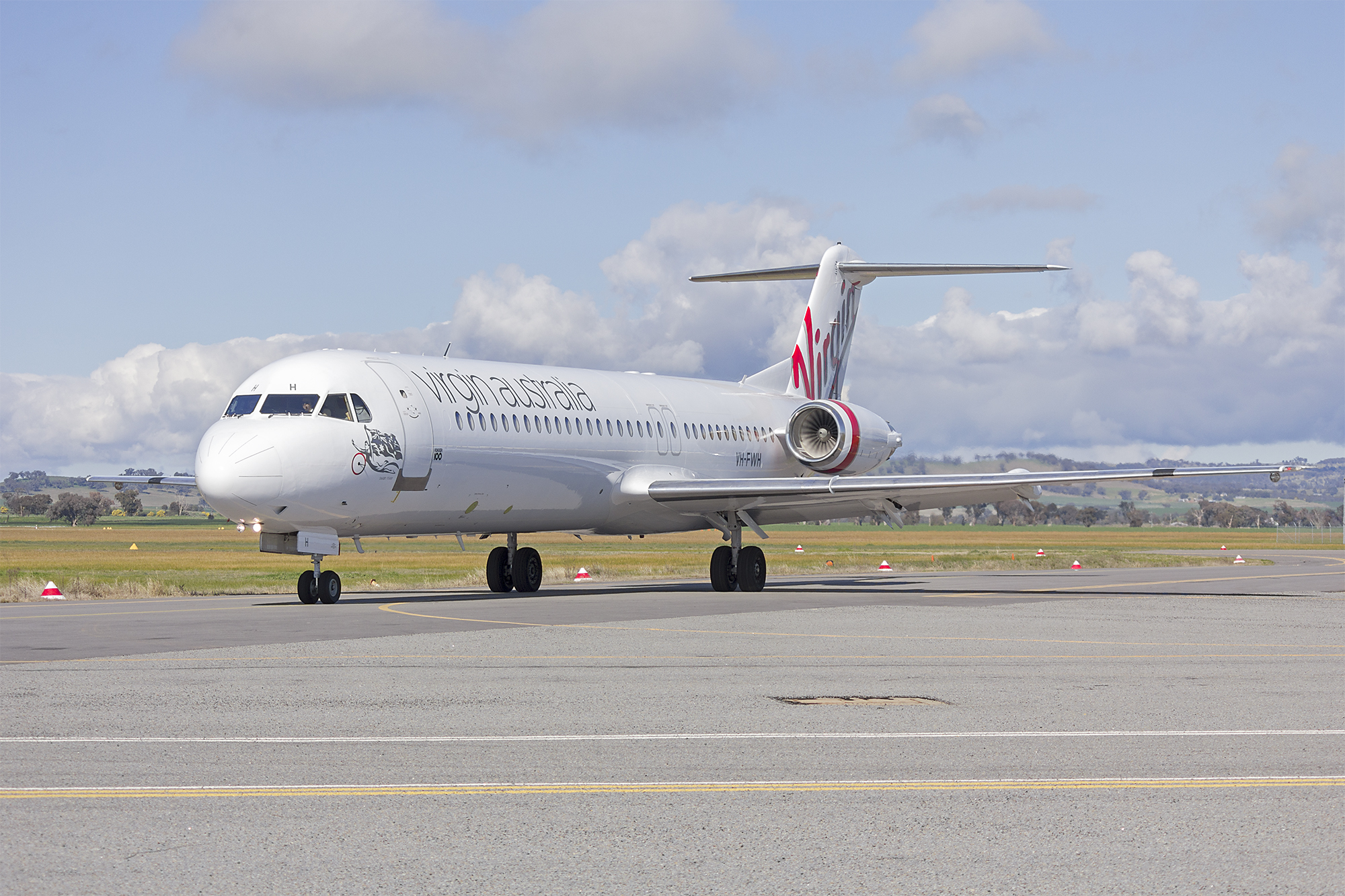
Bidgee [CC BY-SA 3.0 au (https://creativecommons.org/licenses/by-sa/3.0/au/deed.en)]
As QantasLink prepares to say goodbye, the list of active Fokker 100 operators is shrinking rapidly. But a few remain:
✈️ Iran Air & Iran Aseman – Continues to operate a number of F100s on domestic routes.
✈️ Air Niugini – Uses the aircraft across Papua New Guinea’s challenging terrain.
✈️ Alliance Airlines (Australia) – Still operates a large fleet, mostly for charter and resource-sector flights.
✈️ Virgin Australia (Australia) – Soon to be replaced by Embraer E2s, but still two F100s operating out of Perth.
✈️ Various African Airlines – Including Premier Airlines, Skyward Express
Many remaining airframes are in storage for parted out.
Want to Fly a Fokker 100 While You Still Can?
If you’re an avgeek hoping to log the Fokker 100 before it disappears completely, now’s the time to act. We’ve tracked every last passenger operator of this and other rare aircraft types in our exclusive book, Last Chance to Fly.
Available only to Airport Spotting Premium members, this resource lists:
-
Over 50 rare and historic aircraft types still flying passengers
-
Routes and airlines still flying them
-
And updates every month
Membership also includes:
-
Our monthly digital magazine
-
Weekly news and spotting updates
-
Entry into exclusive aviation giveaways
👉 Join Airport Spotting Premium today and make sure you catch the F100—and many other classics—before they’re gone for good!


1 comment
Australia still has a very healthy Fokker population, with SKIPPERS AVIATION, Perth have 2; NETWORK/QANTASLINK-Perth have 14; VIRGIN AUSTRALIA REGIONAL 2; ALLIANCE AIRLINES , PER/BNE have 23 plus 12 Fokker 70s.
Another 4 or 5 F100s are expected to be retired towards the end of 2025, however the F100/F70 will be around Australian skies for many more years yet.