
Summary
Today, Ryanair is synonymous with the Boeing 737. Its aircraft are instantly recognisable, its fleet strategy famously uncompromising, and its scale unmatched in European low-cost aviation. With hundreds of 737-800s still in service and a rapidly growing fleet of 737 MAX 8-200s, Ryanair has become one of Boeing’s most important customers worldwide.
But this wasn’t always the case.
Long before the airline became Europe’s largest carrier by passenger numbers, Ryanair went through a period of radical transformation — one that saw it move away from turboprops and older British jets, and toward a single-type Boeing 737 fleet that would underpin its low-cost revolution.
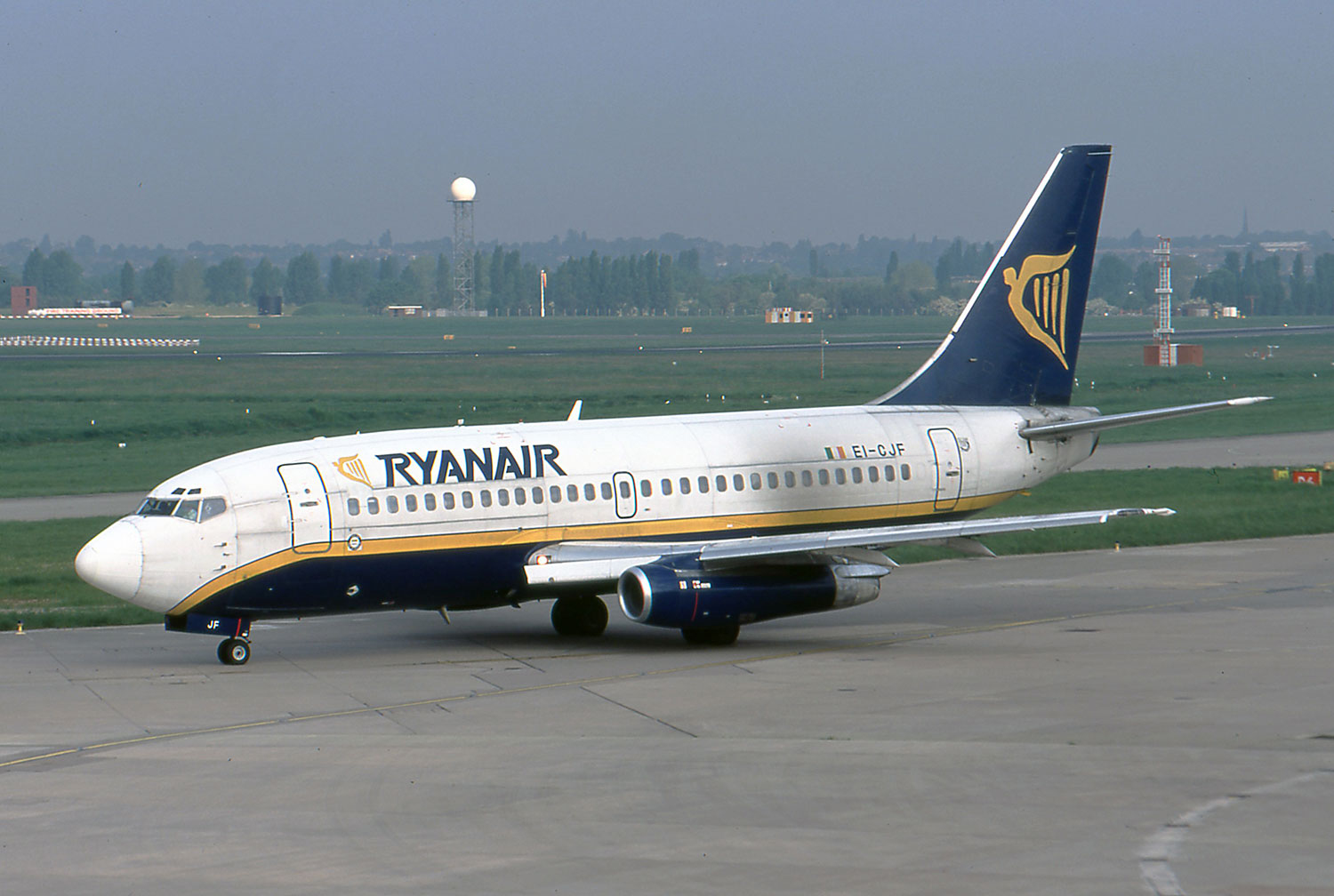
At the heart of that transition was a small but significant fleet of Boeing 737-200s.
This article looks back at those early Ryanair 737s — the aircraft that helped reshape the airline’s identity — and asks what became of them after they left the fleet.
From Regional Carrier to Low-Cost Challenger
Ryanair was founded in 1984 as a very different kind of airline. Its early operations were modest, focused on short routes between Ireland and the UK, and flown with a mix of turboprop aircraft and later BAC One-Elevens.
The airline’s transformation began in the early 1990s, inspired by the low-cost model pioneered in the United States. Ryanair abandoned its traditional airline structure and rebuilt itself around simplicity, low fares, and high aircraft utilisation — a shift that required a very different type of aircraft.
That aircraft was the Boeing 737-200.
Enter the Boeing 737-200
Ryanair introduced the 737-200 as part of its transition toward a single-type jet fleet. At the time, the aircraft was already considered ageing by many legacy carriers, but it offered exactly what Ryanair needed: availability, reliability, and relatively low acquisition costs.
The 737-200 allowed Ryanair to:
- Increase capacity compared to turboprops
- Standardise crew training and maintenance
- Operate short-haul European routes more efficiently
- Lay the groundwork for rapid expansion
Although loud and fuel-hungry by modern standards, the aircraft proved effective in the airline’s early low-cost phase, helping Ryanair establish itself as a serious competitor in the European market.
These aircraft were acquired second (or even third-) hand from airlines that were retiring them in favour of more modern types.
Most of the fleet had previously been flown by either Britannia Airways or Lufthansa before moving to Ryanair.
From Classic to Standardised Giant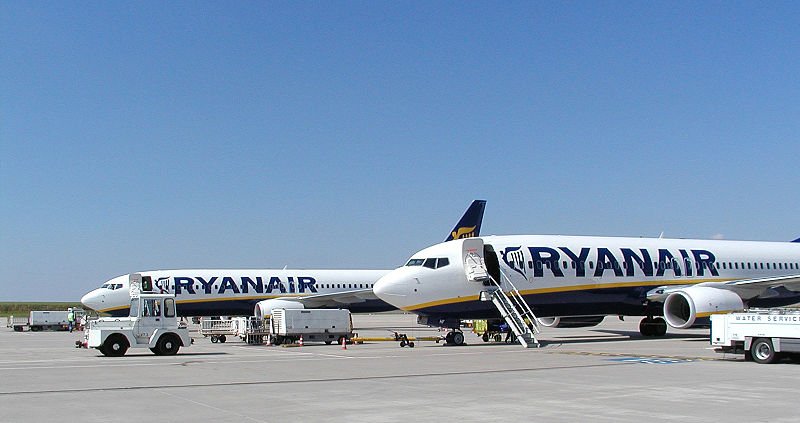
The 737-200 was only ever a stepping stone.
As Ryanair grew, the airline quickly moved to more efficient variants, introducing the Boeing 737-300 before making its now-famous commitment to the 737-800. That decision — to operate a single aircraft type at massive scale — would become central to Ryanair’s cost advantage and operational simplicity.
Over time, the airline built one of the world’s largest uniform fleets of 737-800s, operating them intensively across dozens of bases and hundreds of routes. In recent years, that strategy has evolved further with the arrival of the 737 MAX 8-200, offering higher seating density and lower fuel burn.
Yet none of that growth would have been possible without the early transition period — and without the 737-200s that bridged the gap between Ryanair’s regional beginnings and its low-cost dominance.
A Forgotten but Important Chapter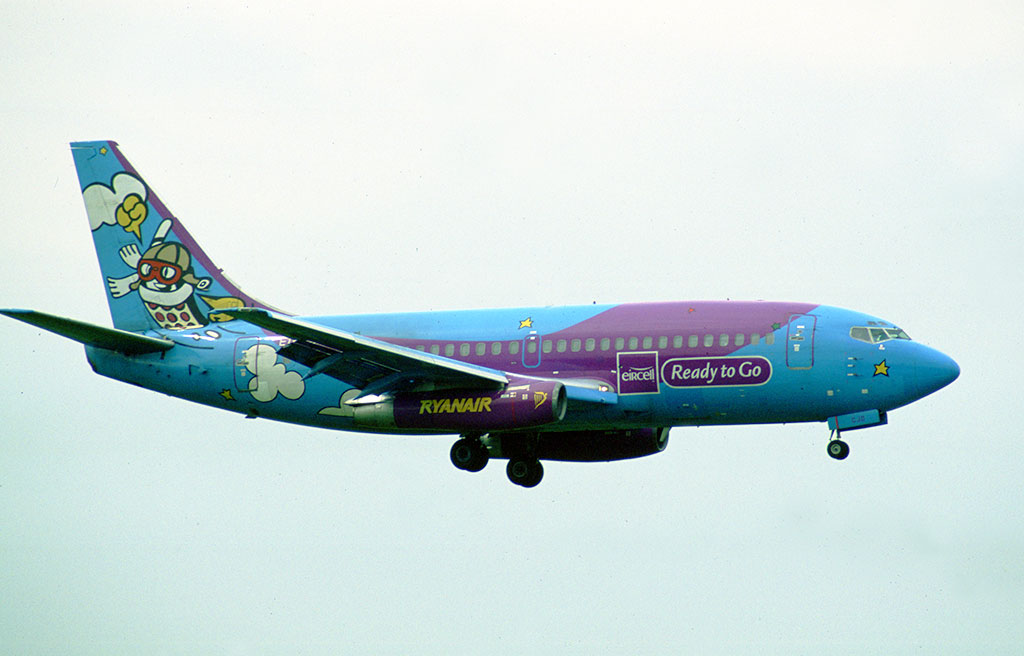
Compared to today’s vast Ryanair fleet, the airline’s early 737-200 operation was small and short-lived. But its importance is hard to overstate. These aircraft marked the moment Ryanair committed fully to the jet-powered low-cost model that would redefine short-haul travel across Europe.
Most of those aircraft disappeared quietly from the fleet as newer jets arrived — sold, stored, converted, or scrapped as economics dictated.
They went on to fly with airlines like LAN Airlines, Star Peru and RUTACA Airlines.
But not all vanished without trace.

Below we look at the surviving airframes from Ryanair’s early Boeing 737-200 fleet — and where they can be found today.
EI-CJC (22640/867) – WFU Lima, Peru at OB-1839-P
EI-CJD (22966/946) – Instructional airframe at Dublin Airport
EI-CJE (22639/863) – Scrapped in 2015
EI-CJF (22967/953) – Scrapped in 2005
EI-CJG (2058/629) – Scrapped in 2016
EI-CJH (22057/621) – Instructional airframe at Wuhu Institute of Technology, China
EI-CJI (22875/917) – Scrapped in 2012
EI-CKP (22296/668) – Scrapped in 2006
EI-CKQ (22906/888) – Scrapped in 2004
EI-CKR (22025/647) – Scrapped in 2004
EI-CKS (22023/636) – Scrapped in 2005
EI-CNT (22115/694) – Scrapped in 2011
EI-CNV (22128/752) – Scrapped
EI-CNW (22133/772) – Scrapped
EI-CNX (22127/745) – WFU Caracas as YV380T
EI-CNY (22113/649) – Scrapped
EI-CNZ (22126/735) – Scrapped
EI-COA (22637/848) – Scrapped in 2011
EI-COB (22124/727) – Last noted stored in Lima, Peru as YV475T
EI-CON (22396/730) – Written off in 2011
EI-COX (22123/726) – Preserved at Eastern Warbirds of Norway Museum, Skein, Norway as ZS-EVE

As you can see, this means that only five or six of the original Ryanair 737-200 are still in existence, and none are flying any more.
This is understandable given their age, and the amount of operators each went through both before and after Ryanair service.
Did you ever fly on a Ryanair 737-200? Do you remember seeing them on the airline’s regular services across the UK, Ireland and Europe? Leave a comment below!


1 comment
[…] Source: https://www.airportspotting.com/ryanairs-early-737-fleet-where-are-they-now/ […]