

Summary
The British Aerospace Jetstream series — including the Jetstream 31/32 and stretched Jetstream 41 — is one of the classic regional turboprops of the 1980s and 90s. Small, tough, noisy and full of character, the Jetstream carved out a niche on short commuter routes where larger regional aircraft simply didn’t make sense.
Today, more than 40 years after its introduction, the Jetstream remains in limited commercial service around the world. While most major airlines have retired it in favour of modern types, a handful of carriers still operate the Jetstream on essential regional and remote routes.
Here’s a look at the airlines that still fly the BAe Jetstream — and why this rugged little British turboprop continues to thrive in niche roles around the globe.
A Brief History of the Jetstream
The Jetstream story began with Handley Page, which launched the original design in the late 1960s as a pressurised commuter aircraft. After Handley Page collapsed, Scottish Aviation took over production, followed ultimately by British Aerospace, which developed the best-known variants:
- Jetstream 31 — introduced in the early 1980s
- Jetstream 32 — an upgraded, more powerful version
- Jetstream 41 — a stretched, 29-seat evolution used heavily by airlines like South African Express
The Jetstream was built for short hops, small airfields, and tough operating conditions. Its compact size and lively performance made it a favourite among pilots and regional airlines.
By the 2000s, however, most first-world airlines phased it out as airport security, passenger expectations, and regional fleet standardisation shifted toward larger turboprops and regional jets. But the Jetstream remains valuable where demand is thin and runways are short.
Airlines Still Flying the Jetstream Today

AIS Flight Academy, CC0, via Wikimedia Commons
Commercial Jetstream operations continue mainly in remote regions, island networks, and specialist charter markets. These are the key remaining operators as of 2026:
AIS Airlines (Netherlands / Germany / Scandinavia)
AIS Airlines is one of Europe’s last operators of the Jetstream 32, running scheduled and charter flights across the Netherlands, Germany, Scandinavia and Eastern Europe.
The airline operates a fleet of Jetstreams for corporate shuttles, ACMI services and thin regional routes where a larger turboprop would be under-filled. Spotters frequently catch AIS Jetstreams at Münster/Osnabrück, Bremen and Lelystad.
Aerolíneas Sosa (Honduras)
A Honduras domestic carrier based at La Ceiba and flying five Jetstream 31s among other commuter aircraft.
Pascan Aviation (Canada)
Canada’s Pascan Aviation has historically flown the Jetstream 32 on regional services across Québec and Newfoundland.
Although some aircraft are being phased out, a number of Jetstreams continue to appear on essential regional routes to smaller airports where larger aircraft would be impractical.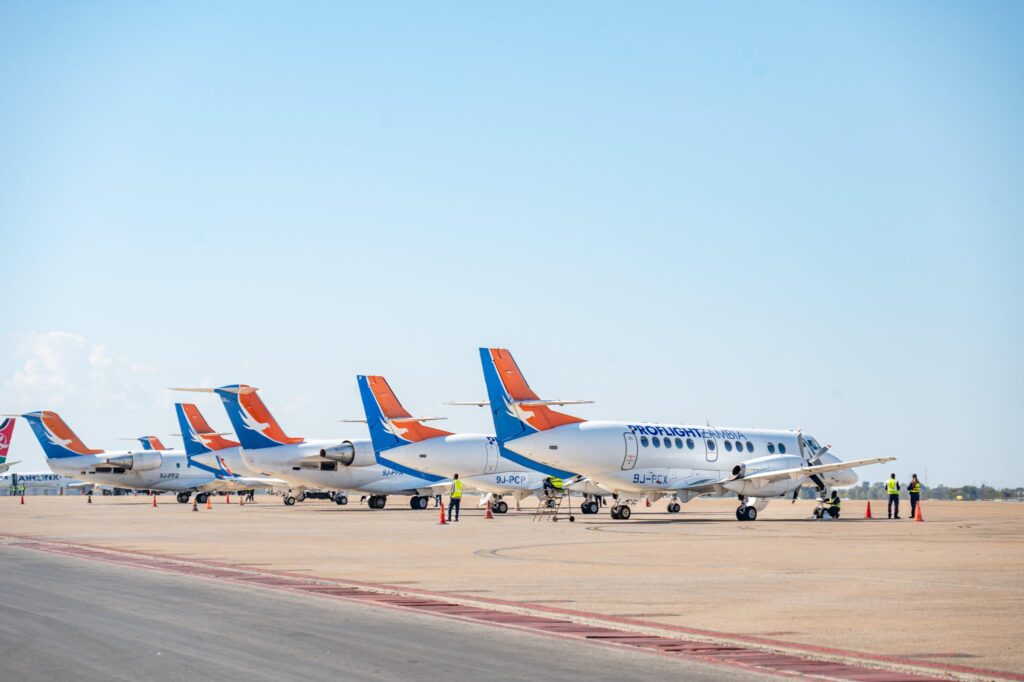
Proflight Zambia (Zambia)
Proflight serves cities in Zambia, plus Lilongwe in Malawi and Durban in South Africa, from its base at Lusaka. It flies three Jetstream 31/32 aircraft, and three Jetstream 41s.
Northwestern Air (Canada)
Based at Fort Smith in Canada’s Northwestern Territories, this airline flies a range of light and regional aircraft to support its operations in the wild north of the country.
Its eight Jetstream 31/32s are used on scheduled services to destinations like Edmonton, Fort McMurray, Hay River and Yellowknife among others.
ACSA Air Century (Dominican Republic)
An air charter company based at La Isabella and Las Americas airports in the Dominican Republic, offering domestic flights as well as some to other parts of the Caribbean. Operates four Jetstream 31s.
Southern Air (Bahamas)
A Bahamas-based charter airline which operates some scheduled services around the island chain. It flies three Jetstream 32 aircraft.
Lanhsa Airlines (Honduras)
This regional airline is based in La Ceiba, Honduras and flies both charter and scheduled services to domestic destinations around the country using seven Jetstream 31/32 aircraft, plus a single Jetstream 41.
Originair (New Zealand)
Based at Nelson Airport in New Zealand, Originair flies domestic flights using four Jetstream 31/32 aircraft to cities such as Napier, Palmerston North, Plymouth and Wellington.
FlyPelican
A small Australian regional airline based at Newcastle Airport in New South Wales, and also flying out of Canberra and Sydney. It has five Jetstream 32s in its fleet.
Specialist Charter & Contract Operators (Worldwide)
The Jetstream survives in a long tail of small operators around the world, including:
- Remote charter airlines in Africa
- Contract survey and mapping specialists
- Medical evacuation operators
- Pilot training academies
While these aren’t scheduled airlines, they help keep the Jetstream active, often flying in environments where sturdiness and simplicity outweigh cost-efficiency.
Why the Jetstream Endures
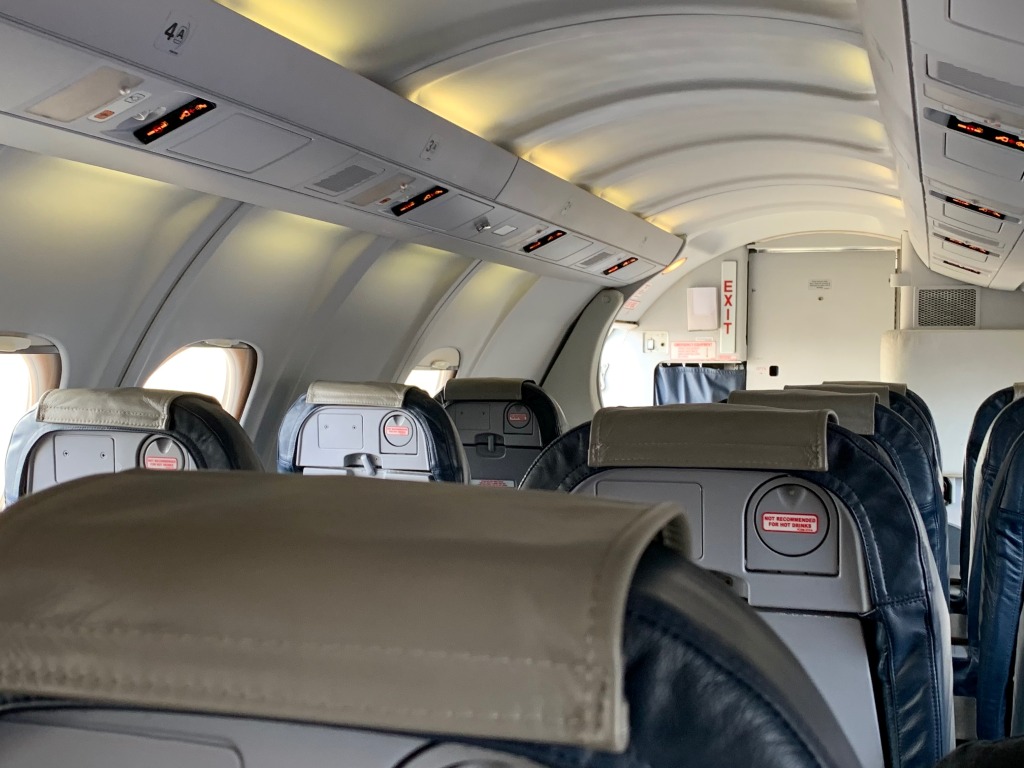
A Jetstream 41 cabin
Even in 2026, the Jetstream offers several advantages that keep it viable:
- Low operating costs
- Good performance on short or rough runways
- Ideal capacity for low-demand routes
- Simple maintenance and robust engineering
For many remote communities, especially in Canada and parts of Africa and South America, the Jetstream remains a lifeline aircraft.
Is the Jetstream Nearing the End?
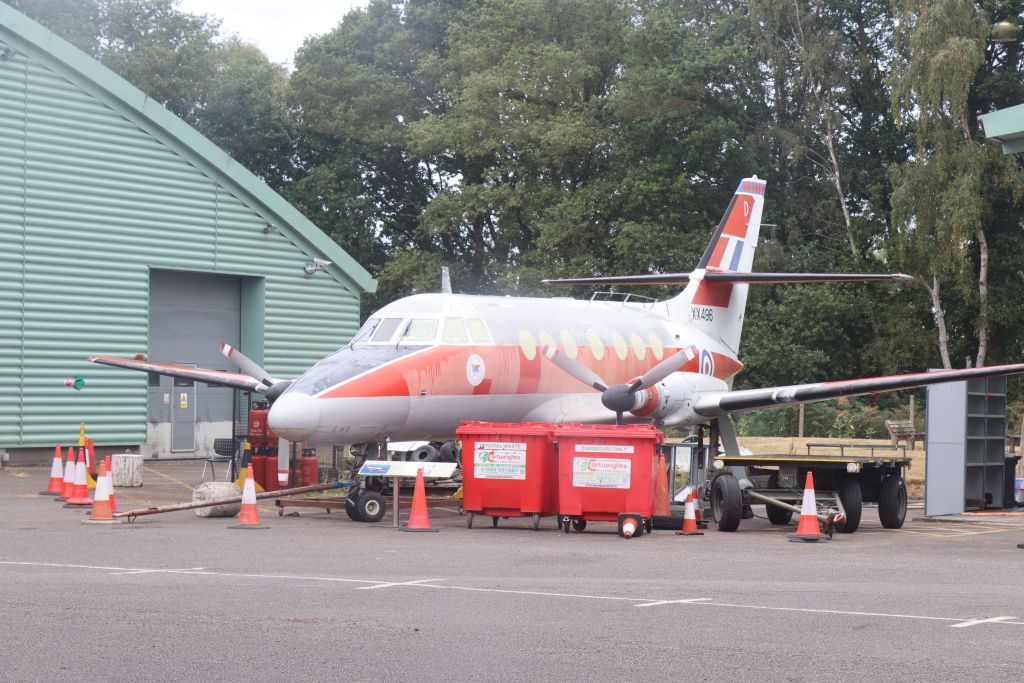
A retired Royal Air Force Jetstream at Cosford Museum.
While still active, the Jetstream is shrinking year by year. Airlines are turning to:
- Dornier 228NG
- Pilatus PC-12 and PC-12NGX
- Cessna 208 Caravan
— plus larger ATR and regional jet aircraft, all of which offer lower fuel burn, modern avionics, or single-pilot operations.
For enthusiasts and fans of flying on rarer aircraft, catching a Jetstream in 2026 is a reward — a glimpse of a classic regional turboprop still doing what it was built for: connecting remote places, flying through weather, and keeping essential air services alive.
Did you ever fly on a Jetstream? Leave a comment below!
Last Chance to Fly

If you’d like to keep up with opportunities to fly rare or historic airliners, like the British Aerospace Jetstream, we produce a guide for our Premium Members called Last Chance to Fly. Inside you’ll find around 50 different aircraft types, from wartime pistons, to Soviet-era airliners and rarer modern types. With each, we detail the airlines still flying them and how you can take a flight on one.
Available Exclusively to Airport Spotting Premium Members – Sign Up Here
Title image: Quintin Soloviev, CC BY-SA 4.0 <https://creativecommons.org/licenses/by-sa/4.0>, via Wikimedia Commons



2 comments
[…] Source: https://www.airportspotting.com/which-airlines-still-fly-the-british-aerospace-jetstream/ […]
I have had 5 flights in J31 Jetstreams in 1996 and 97, with Skywest Airlines out of Perth.
Yes we still have five in the Sydney area , always good to see.