
Summary
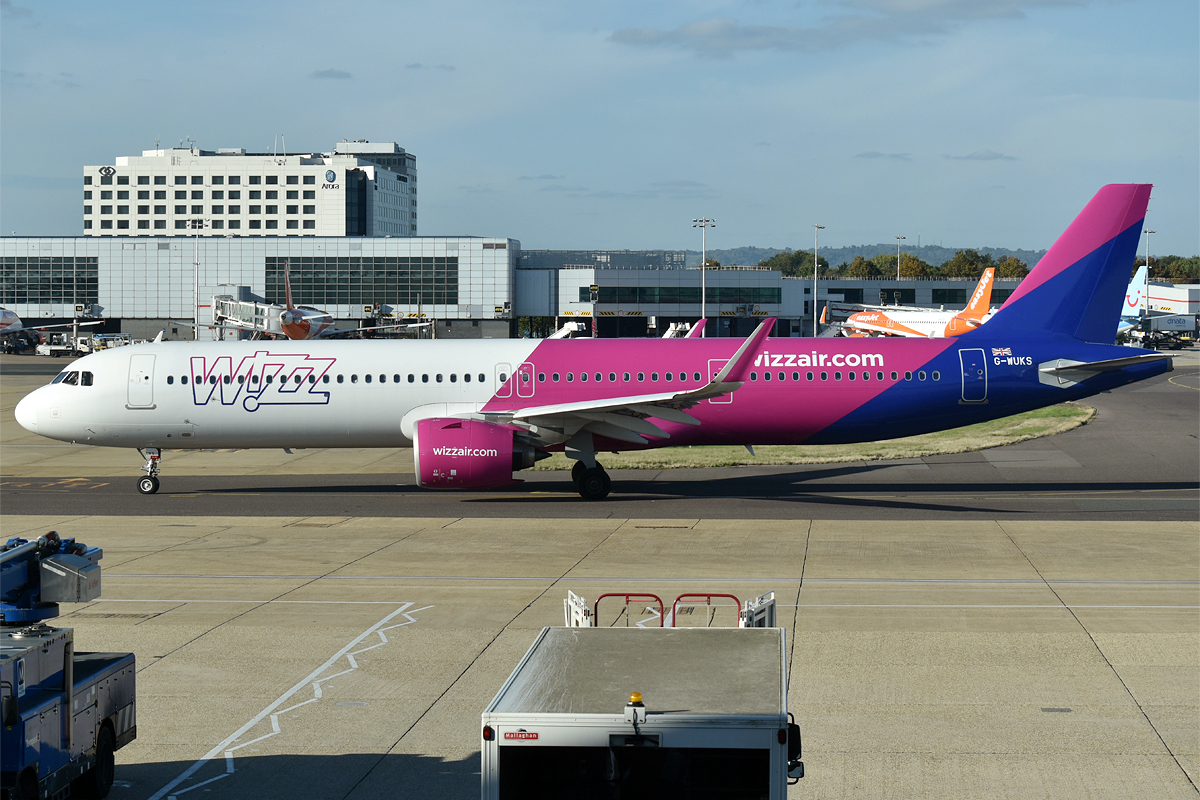
Low-cost giant Wizz Air is reportedly taking a major step toward entering the transatlantic market, with its UK subsidiary applying to the U.S. Department of Transportation (DOT) for permission to operate flights between the United Kingdom and the United States.
The move, if approved, would mark a striking expansion of Wizz Air’s business — from its traditional short- and medium-haul network across Europe to the highly competitive and lucrative Atlantic market, where legacy carriers and a few low-cost challengers have battled for decades.
A Strategic Shift in Ambition
Wizz Air UK’s application — filed late in January 2026 — seeks both an exemption and a Foreign Air Carrier Permit from the U.S. DOT under the U.S.–UK Open Skies Agreement of 2020. This framework allows airlines from both countries to operate with relatively liberal traffic rights, provided they meet regulatory requirements.
What makes this especially noteworthy is the contrast with Wizz Air’s past stance. As recently as 2023, the airline’s leadership publicly discounted North America as a market for its ultra-low-cost model. But in the years since — including the closure of its loss-making Wizz Air Abu Dhabi base — the carrier has refocused its strategy, with transatlantic flying now on the table.
What the Application Covers
The regulatory filing doesn’t yet list specific destinations or launch dates. Instead, Wizz Air UK is seeking broad authority to operate both:
-
Passenger charter services immediately upon approval
-
Scheduled services in the future, without needing additional permits from the DOT
This dual approach gives the airline flexibility to test the market — likely starting with seasonal or demand-driven charters — then pivoting into full scheduled operations if conditions are favourable.
Why the Transatlantic Market Matters
For decades, transatlantic routes have been dominated by legacy carriers such as British Airways, Virgin Atlantic, American Airlines and others, while low-cost intruders have struggled to sustain service. Past low-fare attempts — such as Norwegian Air’s long-haul operation and Icelandic carrier WOW air — were ultimately unable to stay profitable over the long term.
Wizz Air’s plan would be to lean on the Airbus A321XLR — a modern, fuel-efficient long-range narrowbody capable of flying from the UK to much of the eastern and central United States non-stop. Those aircraft are already in Wizz Air UK’s fleet, giving the airline a practical platform for lower-cost transatlantic flying.
In its application, Wizz Air UK highlighted that it operates a fleet of A321neo aircraft, including several XLR variants, which have the range to make transatlantic services viable — especially where demand is balanced and yields support ultra-low-fare pricing.
Potential Hubs, Routes and Competition
Although exact routes are not yet public, analysts and enthusiasts have speculated that the airline could target major U.S. gateways served frequently from the UK, such as:
-
New York (JFK / EWR)
-
Boston (BOS)
-
Orlando (MCO)
-
Miami (MIA)
These corridors see substantial leisure and diaspora travel demand, which a low-cost operator could tap with competitively priced single-aisle services.
Wizz Air is likely planning to operate these flights from a base such as London Luton (LTN) or another UK airport where it already has a strong presence, but this will depend heavily on the DOT’s approval and bilateral slot access negotiations.
What It Could Mean for Transatlantic Travel
If Wizz Air gains approval, it would represent a notable shift:
-
Increased competition on popular UK–U.S. city pairs
-
New lower-cost options for price-sensitive travellers
-
Possible pressure on incumbents to adjust pricing or capacity
-
A potential resurgence of single-aisle transatlantic flying using efficient aircraft like the A321XLR
Spotters and enthusiasts should watch this development closely. Not only could it introduce a new business model into transatlantic flying, but it might also open the door for further long-haul ambitions from European low-cost carriers — a trend that has seen mixed success in the past.
Challenges and Next Steps
Approval is far from guaranteed. U.S. regulators will scrutinise Wizz Air’s ownership structure, operational plans and its ability to serve transatlantic markets competitively and safely. Previous applications — such as a 2022 bid by Wizz Air for cargo operations — were rejected amid political and union opposition.
Responses to the current filing are expected in early February 2026, after which DOT will decide whether to proceed with granting authority.